Curtain installations · ZT Tosha

Opus Relicarium

The curtain installations began at home. In his bathroom the artist hung a length of black fabric on the shower hook, next to the shower curtain, and looked at how it fell: how its weight, its folds and the single point from which it hung decided its form.

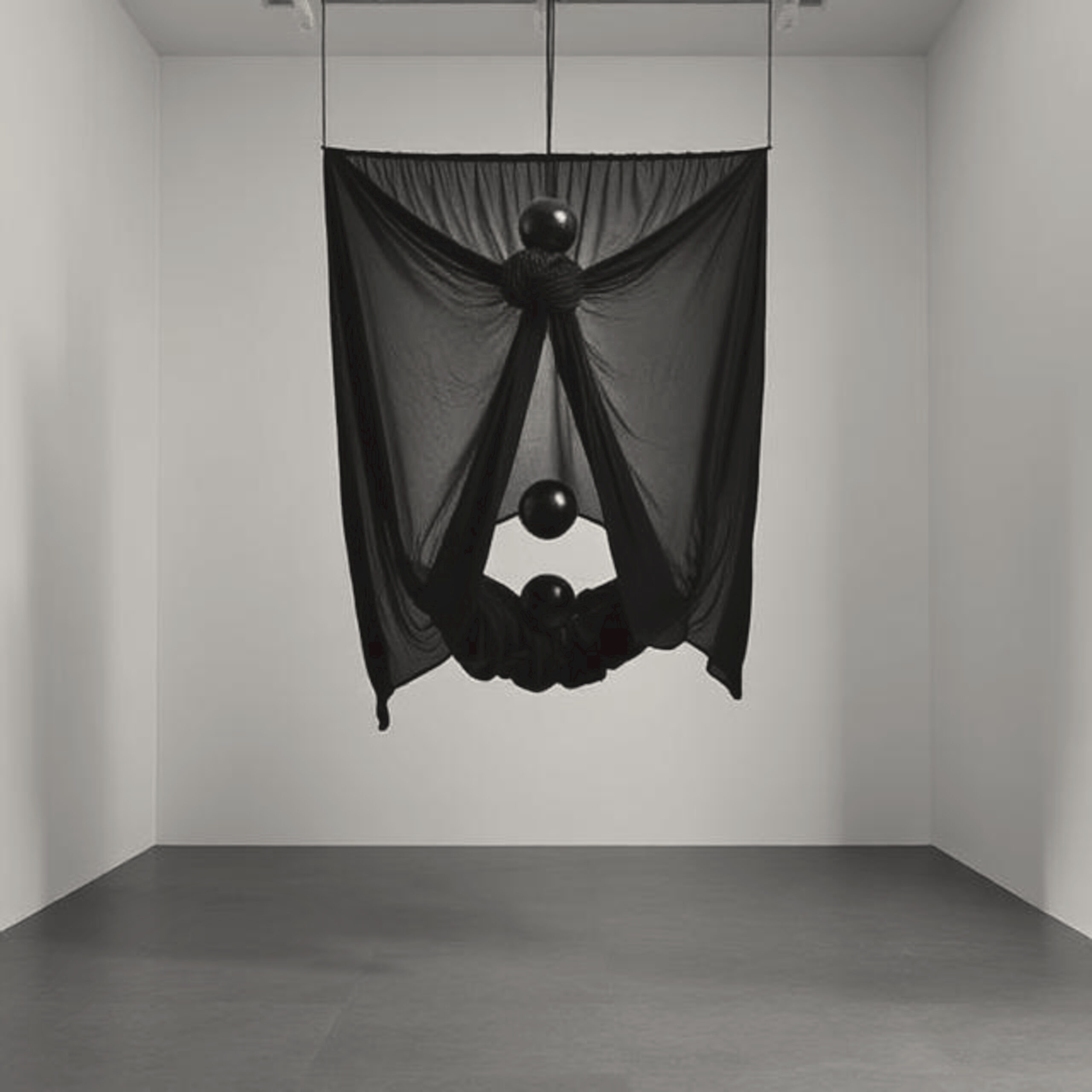
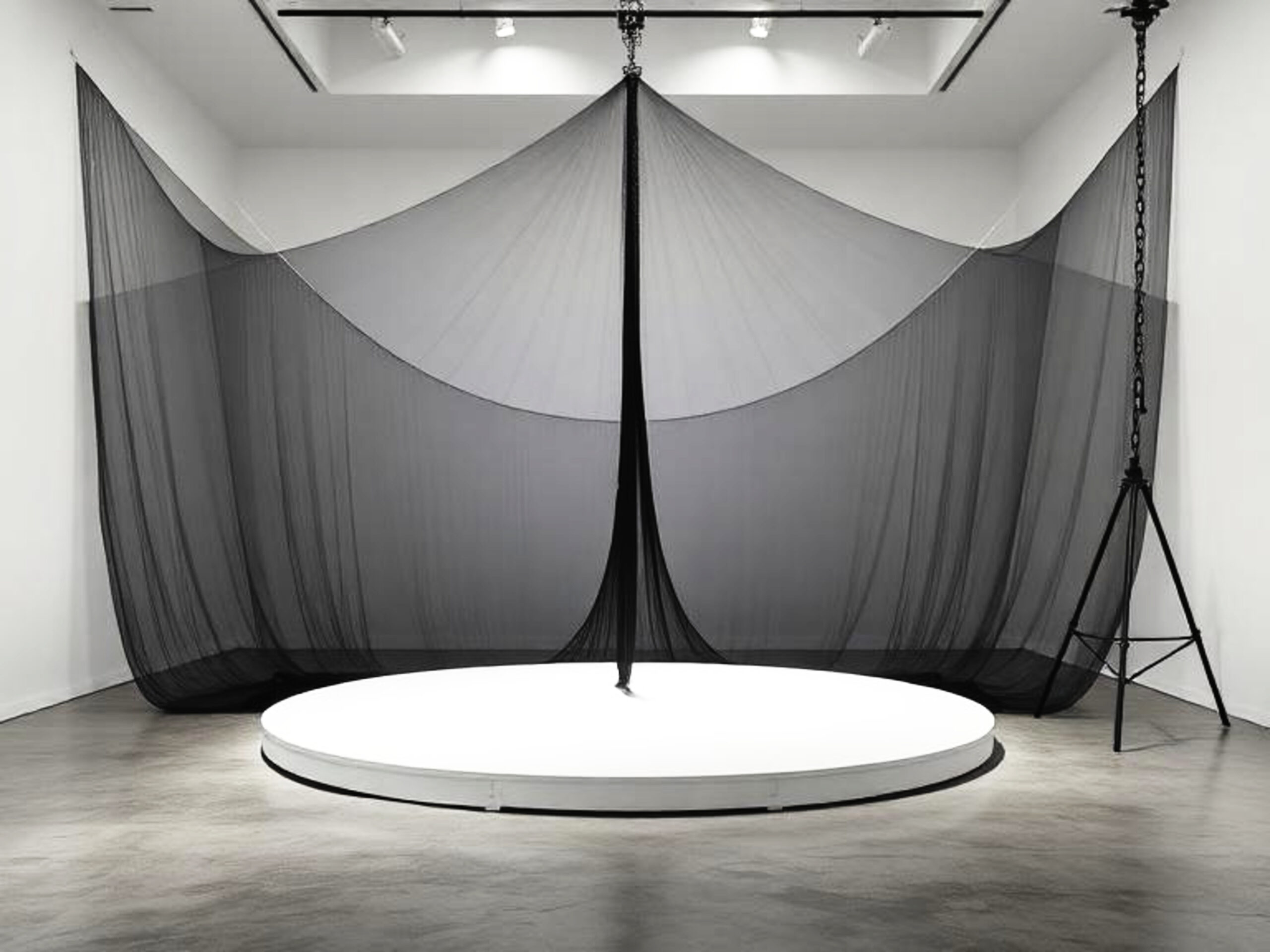
From that domestic study came a group of independent curtain installations. Each began as a small arrangement of fabric, hung, gathered, knotted or spread from one or more points, and was developed by the artist into a photomontage in an exhibition space. The works were published in Art Market Magazine no. 111 (2026). Later the artist merged the curtain works into Opus: The Assembler, where fabric became one module among others. This page keeps the beginning of that line.
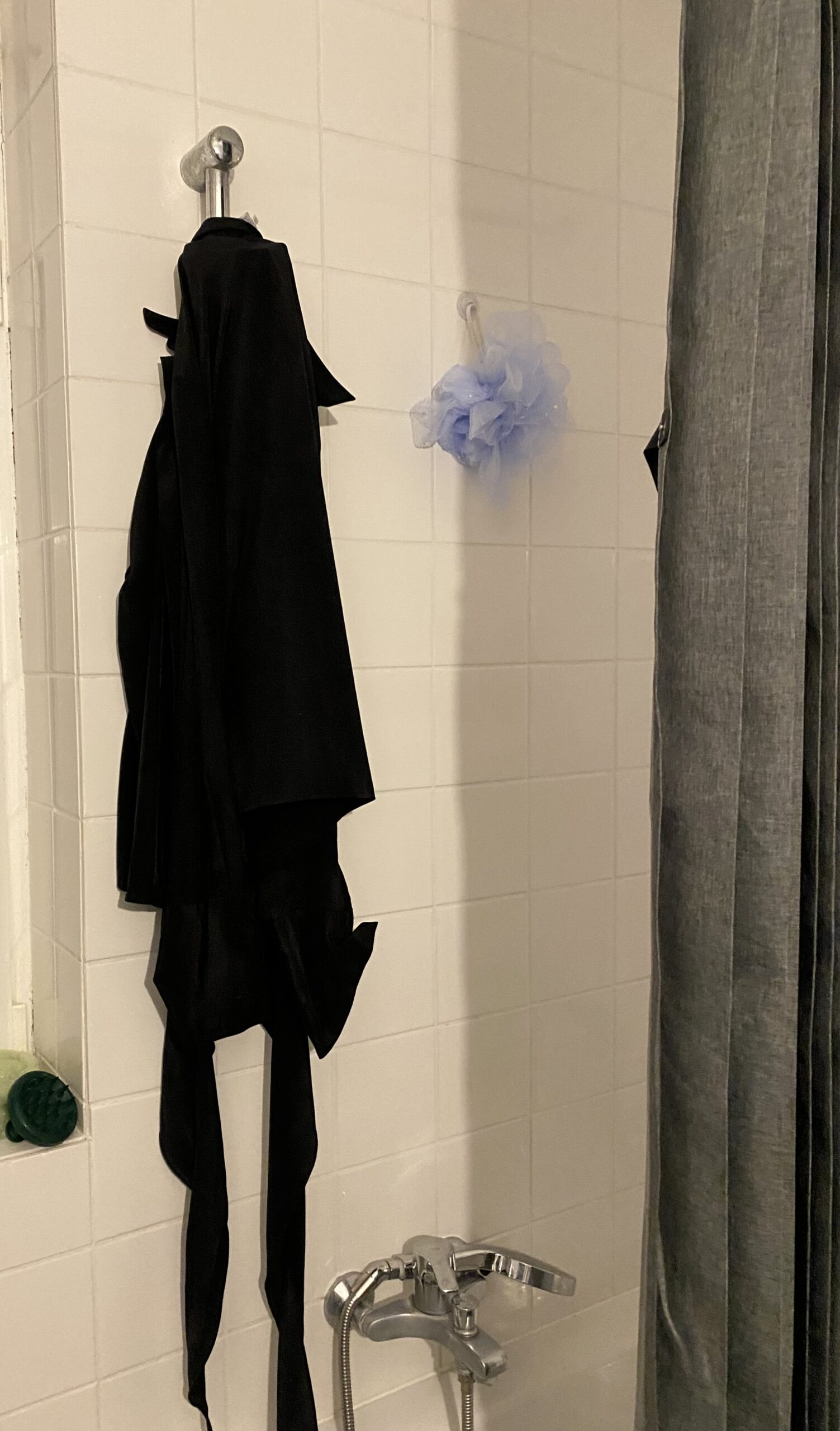
ZT Tosha, Domestic Study 1: black fabric hanging from a shower hook beside a grey shower curtain
Domestic Study 1. Black fabric on a shower hook, the artist’s bathroom. Photograph by the artist. The starting point of the curtain installations.

The installations

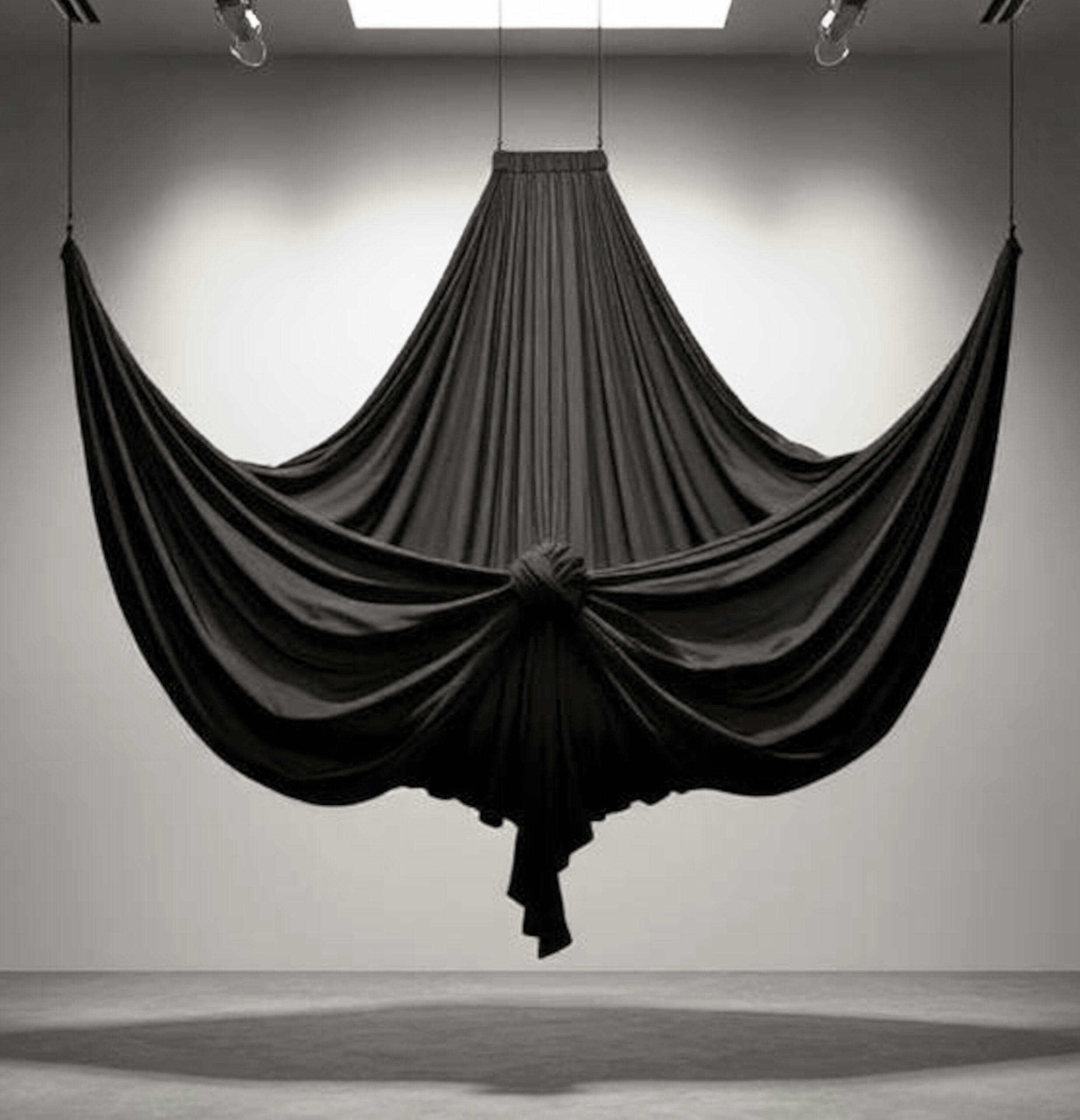
ZT Tosha, Collapse I: black fabric hanging from the ceiling, gathered into a knot at the bottom
Collapse I, 2026. Photomontage by the artist, based on an existing physical model.
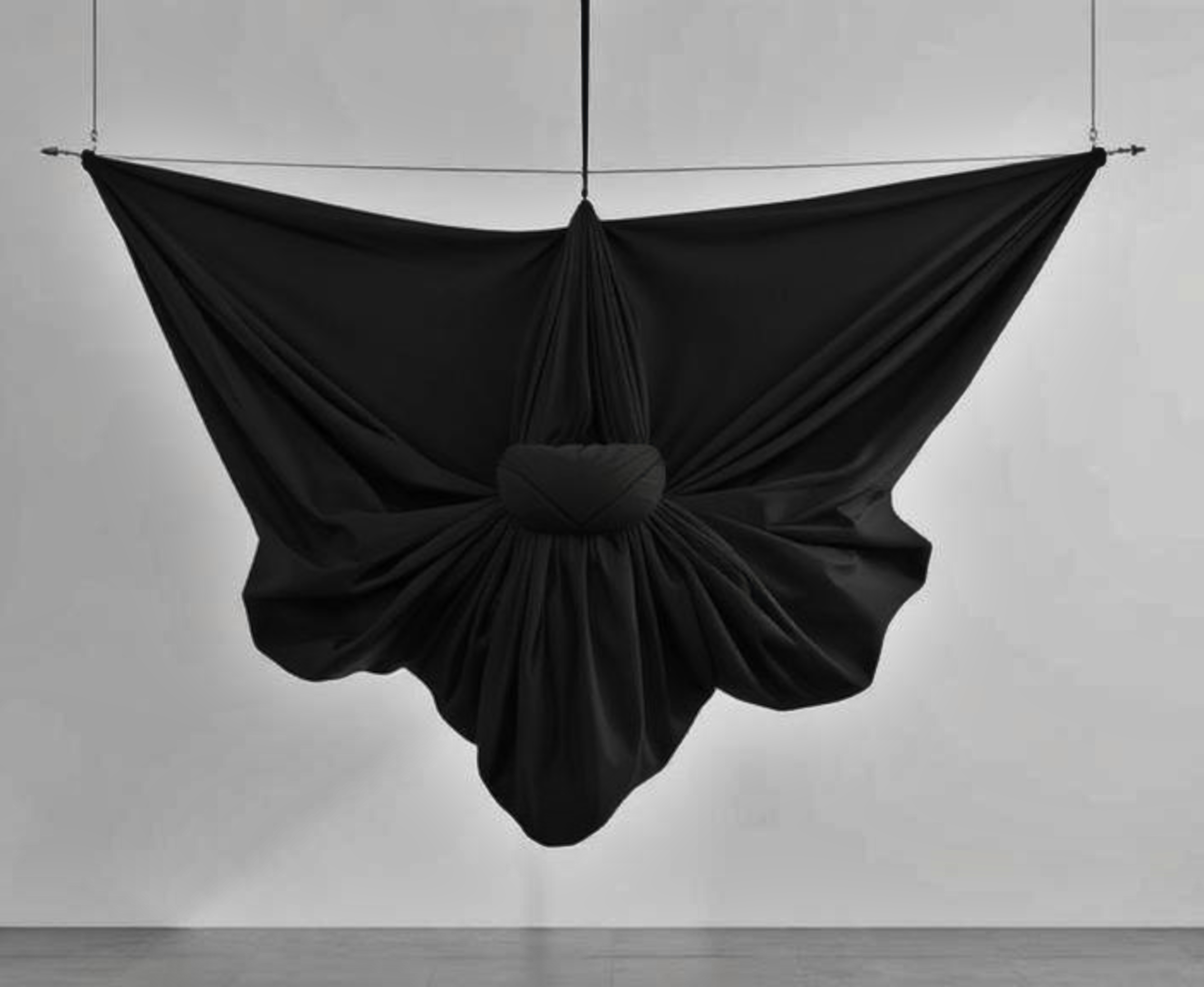
ZT Tosha, Spread II: black fabric hung from a central point and spread open to both sides
Spread II. Photomontage by the artist, based on an existing physical model.
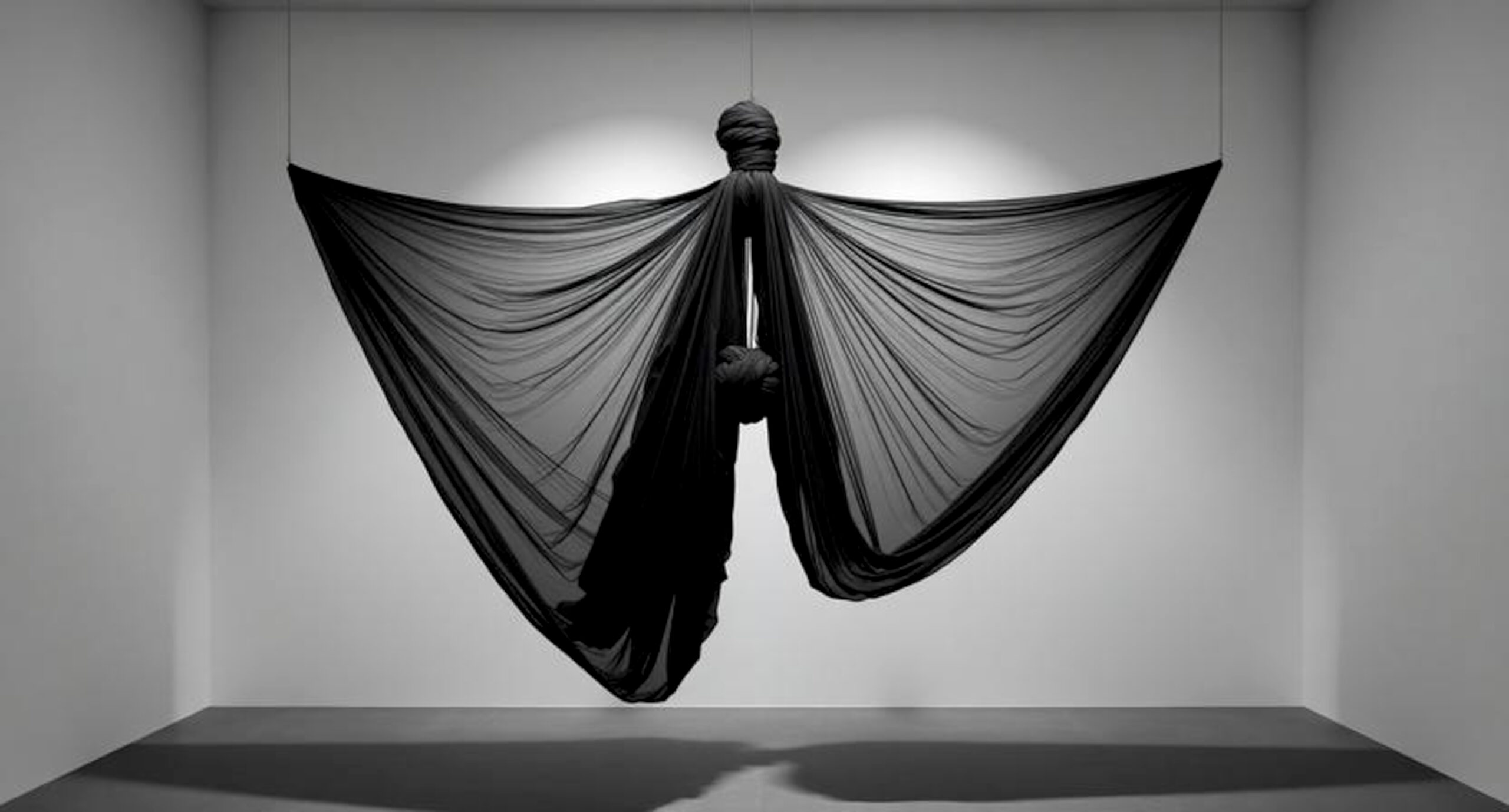
ZT Tosha, Wingspan (IV): a dark plane of fabric stretched horizontally from a narrow central point
Wingspan (IV), 2025. Photomontage by the artist, based on an existing physical model.
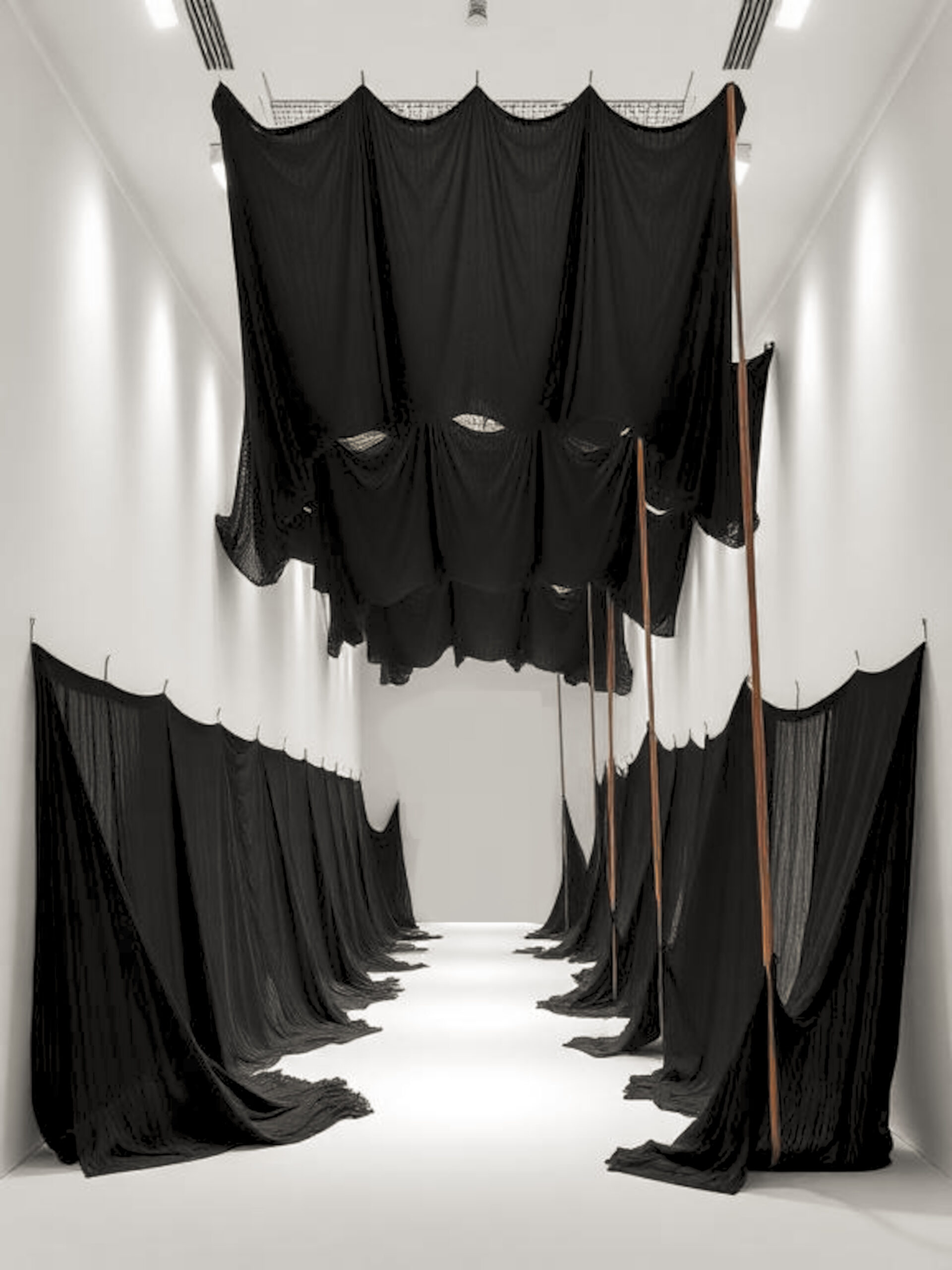
ZT Tosha, Orthogonal Silence: black fabric hung along both walls of a white corridor and suspended overhead
Orthogonal Silence. Photomontage by the artist, based on an existing physical model.
ZT Tosha, After Melencolia: curtain installation in black fabric
After Melencolia. Photomontage by the artist, based on an existing physical model.
ZT Tosha, Realisation IV: curtain installation in black fabric
Realisation IV. Photomontage by the artist, based on an existing physical model.

See Opus: The Assembler, Practice and Philosophy and the CV.