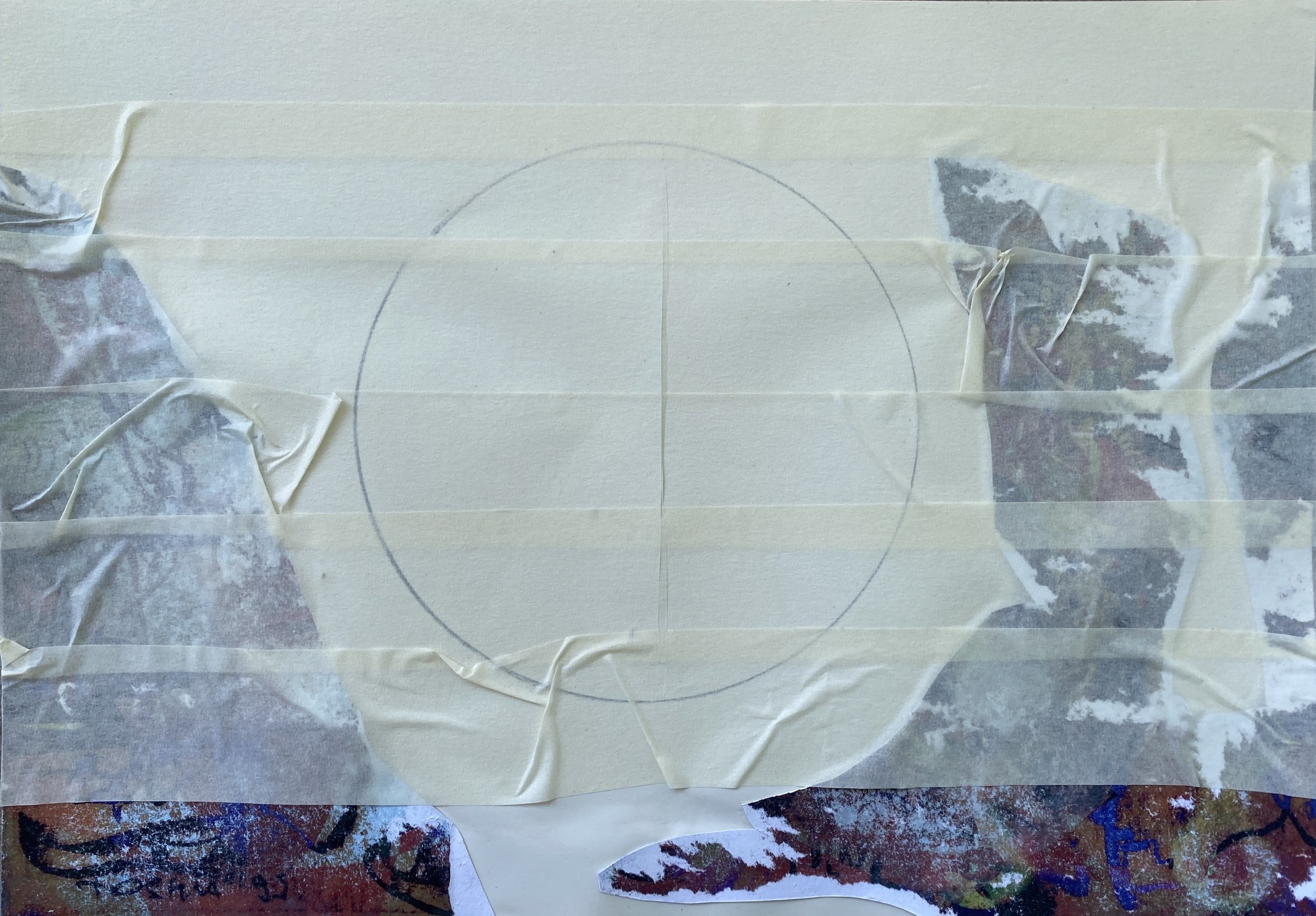
Aperture
Fourteen works in four sets. 2026.
Aperture begins with images that have already been made.
Every work in the cycle starts from one of ZT Tosha’s own finished prints. Each print had reached a resolved state — complete, closed, no longer open to revision. The artist then returned to it and opened its surface again: by cutting, tearing, drawing, covering, staining, perforating, or by holding back almost entirely.
The title refers to an opening — the opening through which an image is formed, and the opening through which it becomes available to perception. The works are concerned with this threshold. What happens when an image that appears finished is looked at again?
The artist calls the method an archaeology of perception. Nothing is invented. What the works recover was already latent in the print; the intervention makes it visible, or deliberately keeps it hidden. No method is repeated. The moment a solution from one work would simply be reused in the next, the work stops.
Where the images come from
The printed images carry thirteen drawings ZT Tosha made in Rotterdam in 1993, while Mostar was under siege. In the same year he photographed every drawing and destroyed the originals: “I do not want to see those drawings anymore. I want to recall them from the memory, so that they can become new.”
Decades later the photographs became digital images, the digital images became archival prints, and in 2026 the prints were reopened by hand. Aperture is the latest return of those drawings. In most works the drawing can no longer be recognised; in a few it still shows through. The signature TOSHA ’93, still visible on several works, is the signature of the drawing, not the date of the work.
Four sets
The fourteen works were made in two groups. The first eight were made between June and August 2026; only when all eight existed did their titles reveal a structure that had not been planned — one arc read forward, one read backward. The second group was planned as eight works; after the sixth, the artist recognised that the next would repeat a solution already found, and stopped.
From these the cycle is shown as four sets. Each set is a small installation.
Set A — Forward
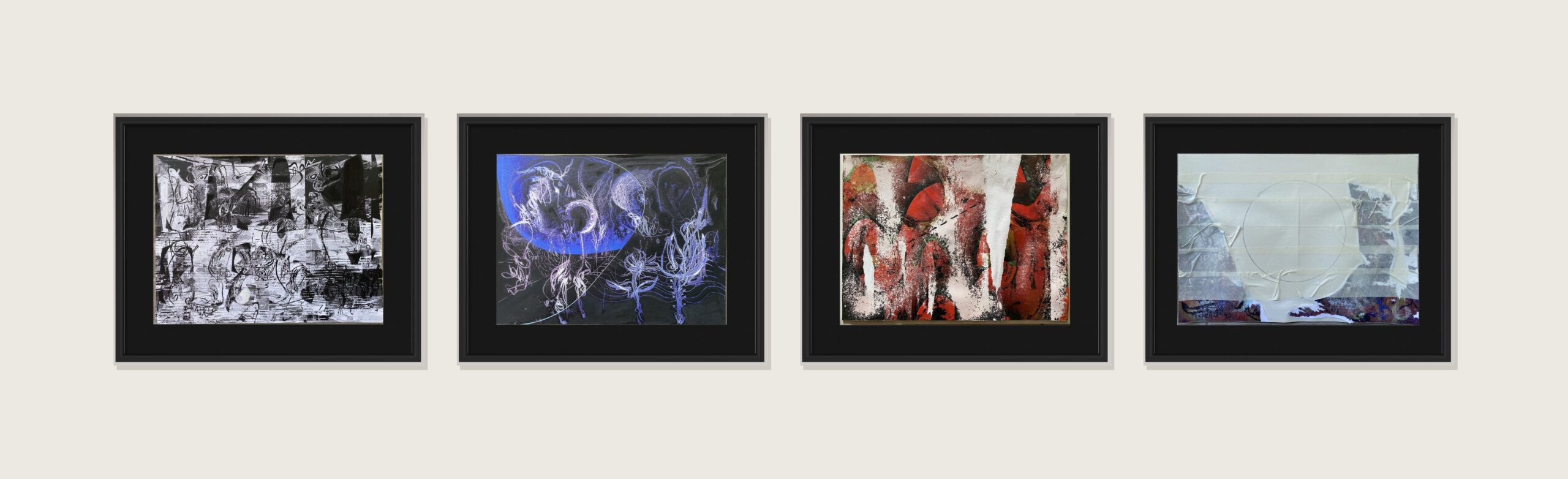
Four works. Conflict, its memory, the search for understanding, concealment.
- Kriegsministerium — gouache and tempera; looking as intervention
- Memory Surfaces — black tempera, watercolour; one rehearsed line
- Looking for the Right Angle — tempera, gouache, torn paper; rupture and discovery
- Occlusion — tempera, packing tape, graphite; concealment and one cut
Set B — Backward
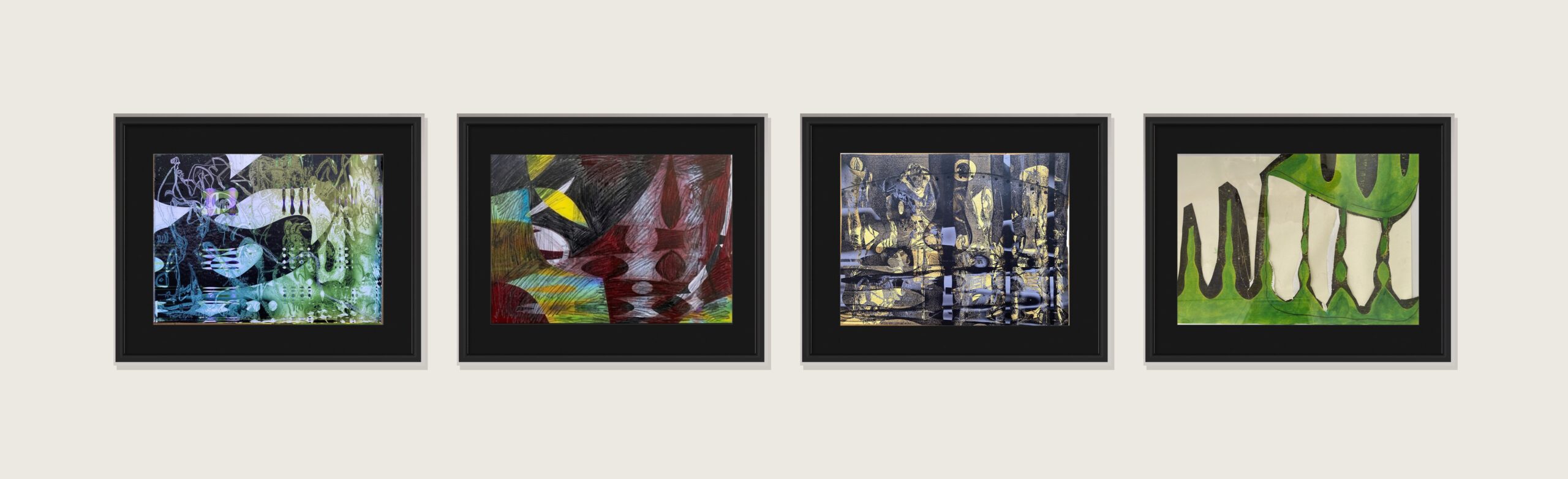
Four works. Read backward: a cell, its emergence, its shaping, its first mark of feeling.
- Cell — white wax pencil; one unbroken line
- Hatching — 7B and 9B graphite; interference without erasure
- Tailoring — watercolour, black tempera; one line and a row of points
- Tear — cut paper, watercolour, 9B pencil; the image beneath the surface
Set C — Openings
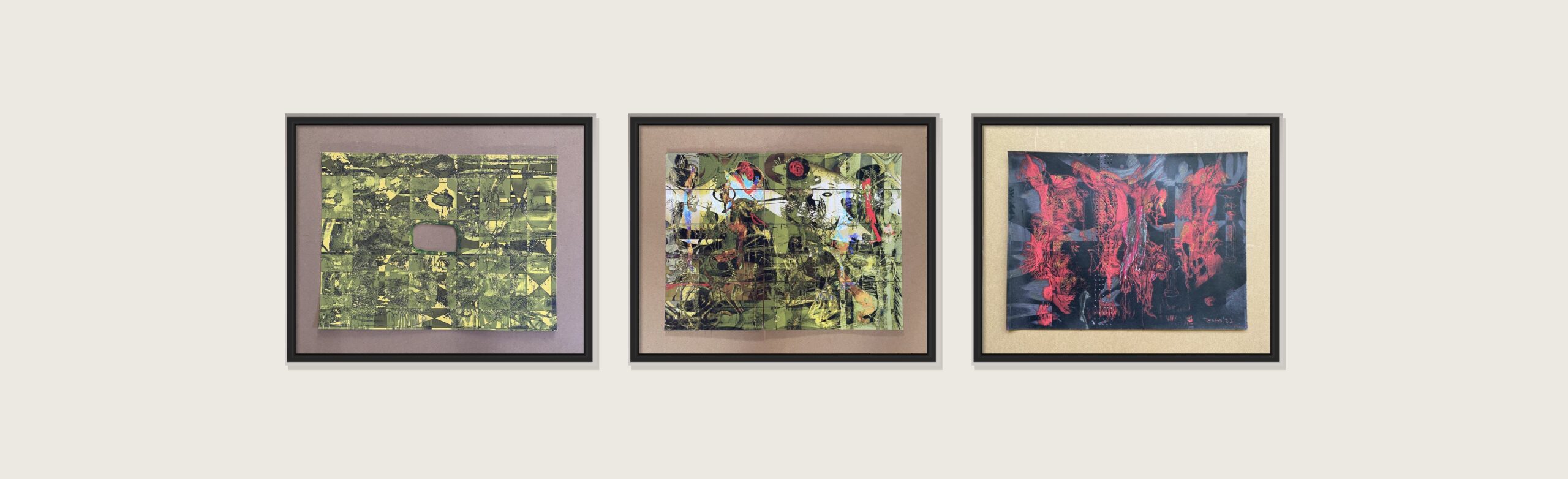
Three works that literally open the surface: a cut, a seam, a column of perforations.
- Noising — watercolour; one cut through print and board
- Seaming — one vertical cut, a few millimetres wide
- Permeating — red wax crayon, graphite, tempera, watercolour; a column of perforations
Set D — Return
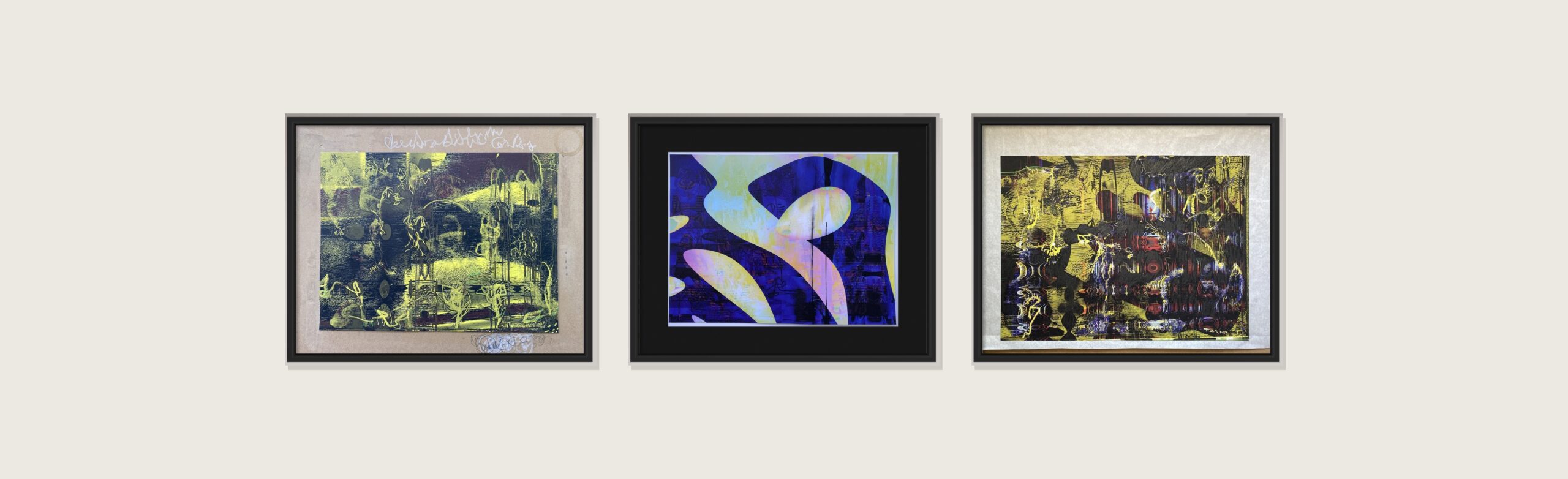
Three works about returning to an image: homecoming, memory, a head tipped downward.
- Nostos — transparent glue, water, sponge; chance stains
- Gazing — layered colour forms; a head tipped downward
- Mneme — tracing paper, graphite, cutouts; fragments reassembled
Same drawing, two answers
Some of the 1993 drawings return more than once. The same source, reopened twice, gives two different works — each unique.
- One drawing lies beneath Occlusion (Set A) and Cell (Set B): almost entirely covered in one, reduced to a single white line in the other.
- Another lies beneath Tailoring (Set B) and Seaming (Set C): one line and a row of points in one, one narrow cut in the other.
How Aperture is shown
Aperture is not a collection of single images. The works are made to be seen together, and they are presented only in sets — of two, three or four. Each set forms an installation and can occupy one wall or several, depending on the space.
Because every work shares the same format, the works can be combined in different ways, like building elements. Whatever the arrangement, the works remain together as a set.
Details
- Cycle: Aperture, 14 works in four sets (A: 4 works; B: 4 works; C: 3 works; D: 3 works)
- Year: 2026, from drawings made in 1993
- Support: archival pigment print on Hahnemühle Photo Rag, reworked by hand by the artist with mixed media. Each work is unique.
- Size: print approx. 40 × 30 cm; framed 50 × 40 cm
- Framing: black frame; black mat for works on paper (Sets A and B, and Gazing), raw board for mounted works (Set C, Nostos and Mneme)
