Sculpture · Strata · 2024–2026
ZT Tosha: Strata, 2024–2026
What remains of a form once the conditions that produced it have been altered? In the Strata series, ZT Tosha’s central inquiry takes shape as a clear, repeatable sculptural method.
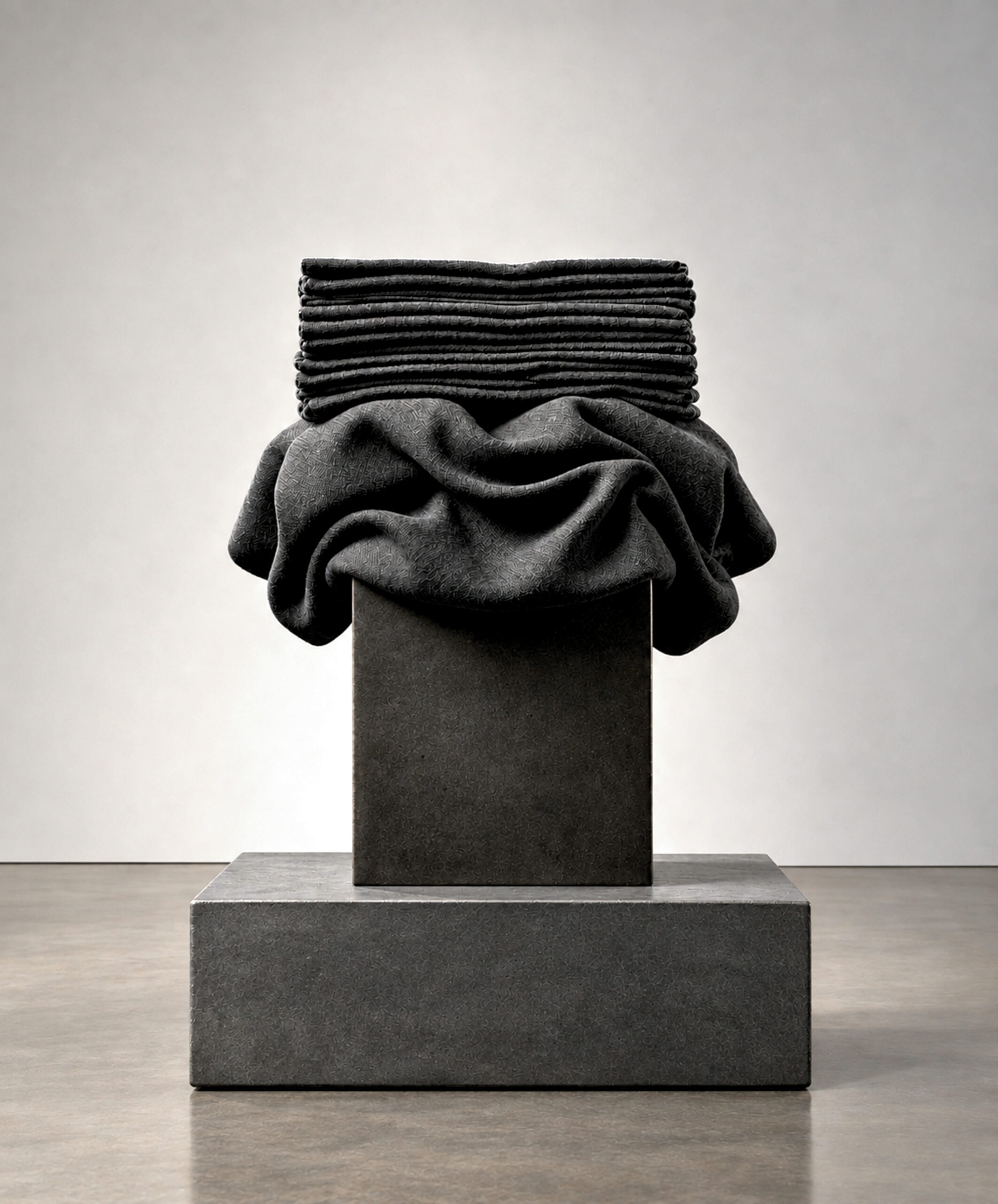
Initiated in 2024 with Strata, Stratum and Stratus, works defined by layered slabs pressing down upon a yielding column of drapery, the series establishes a distinct visual grammar. In the subsequent works, made between late 2025 and 2026, Tosha pushes this tension further, contrasting architectural order with material collapse. Throughout the cycle, stability sits on top, yielding matter rests below, and gravitational load is consistently carried from above.
From domestic assemblage to monumental form
Each work begins as a temporary maquette assembled by hand from everyday household items: stacked back issues of magazines, coiled rope, an upturned bowl, a bound sock, an orange and walnuts. The magazines form the structural constant; each issue acts as a distinct layer of time, building the strata of every piece. The physical assemblage exists only long enough to be photographed before it is dismantled and its elements reused.
Through subsequent studio interventions, the material conditions of the maquette are systematically altered. Toned entirely black, the objects lose their colour and commercial branding, isolating pure volume and surface texture. Placed within a controlled studio set, combined with new geometric elements and rescaled, the forms gain monumental presence while retaining the physical memory of their origins: the knit of the textile and the dimpled skin of the citrus remain visible beneath the austere surface.
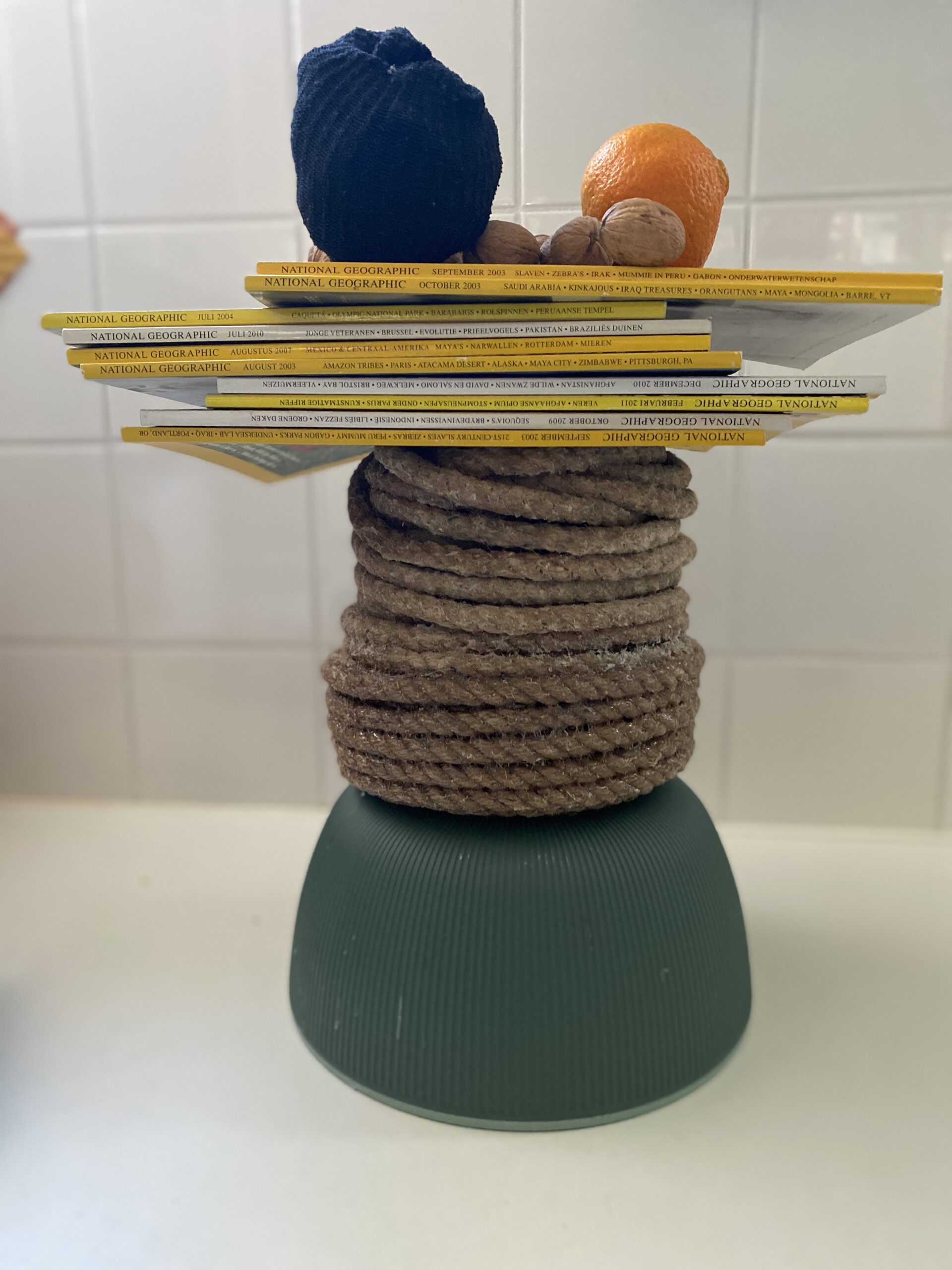
1 The maquette, assembled from household items. Photographed by the artist.
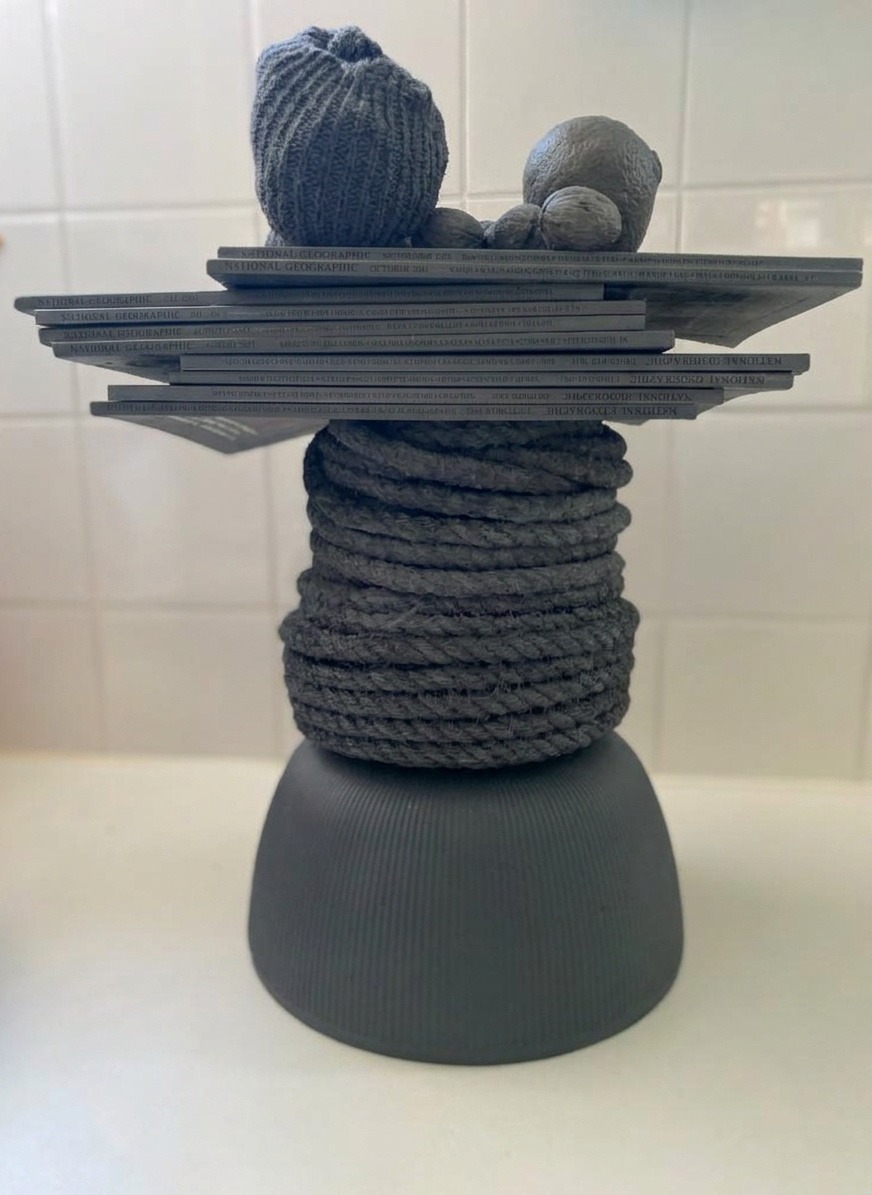
2 Toned black: colour and branding disappear; every texture stays.
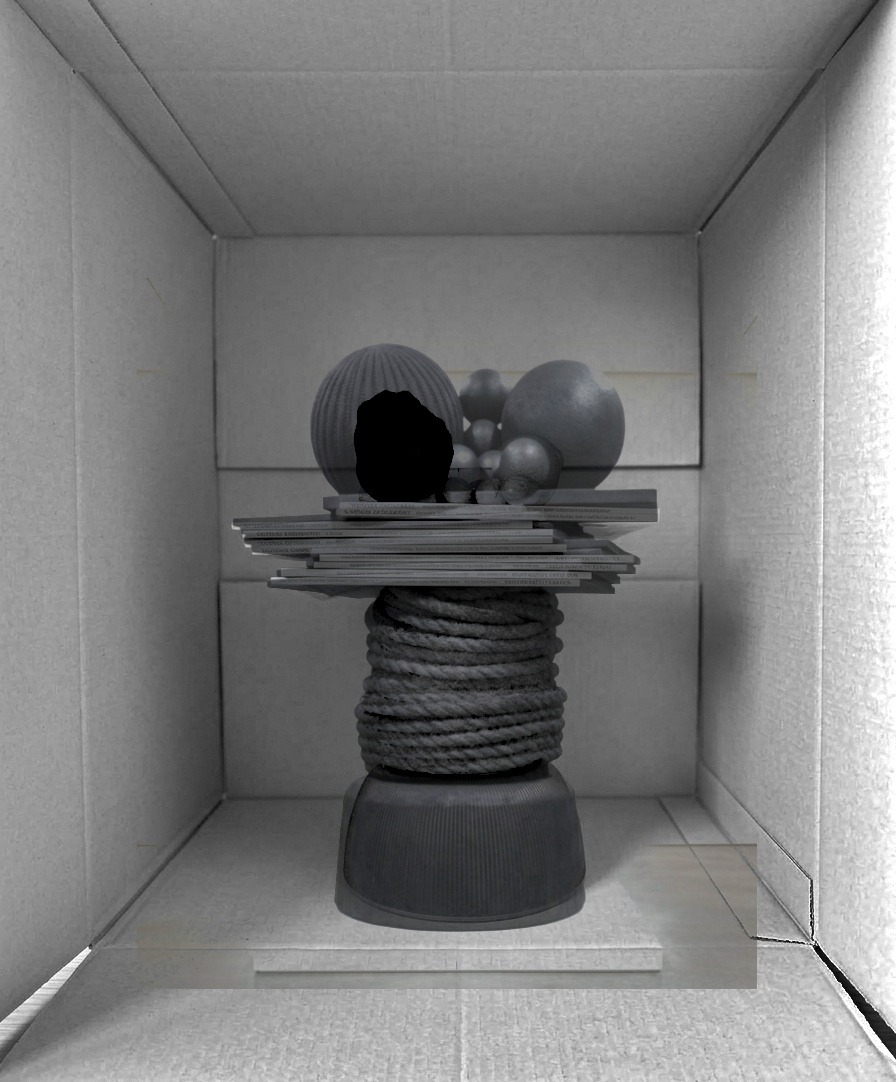
3 The studio set: new geometric elements and a plinth are added by photomontage.
The process of Sedimentum. Process images document the making and are not works in their own right.
Maquette and scale
Tosha establishes architectural scale through tabletop models and photomontage, a medium he has worked in since 1993. In each model he discovers the ratio that defines the work; together with its stated materials, that ratio is the specification for building the sculpture at full scale for exhibition.
Selected works, 2025–2026
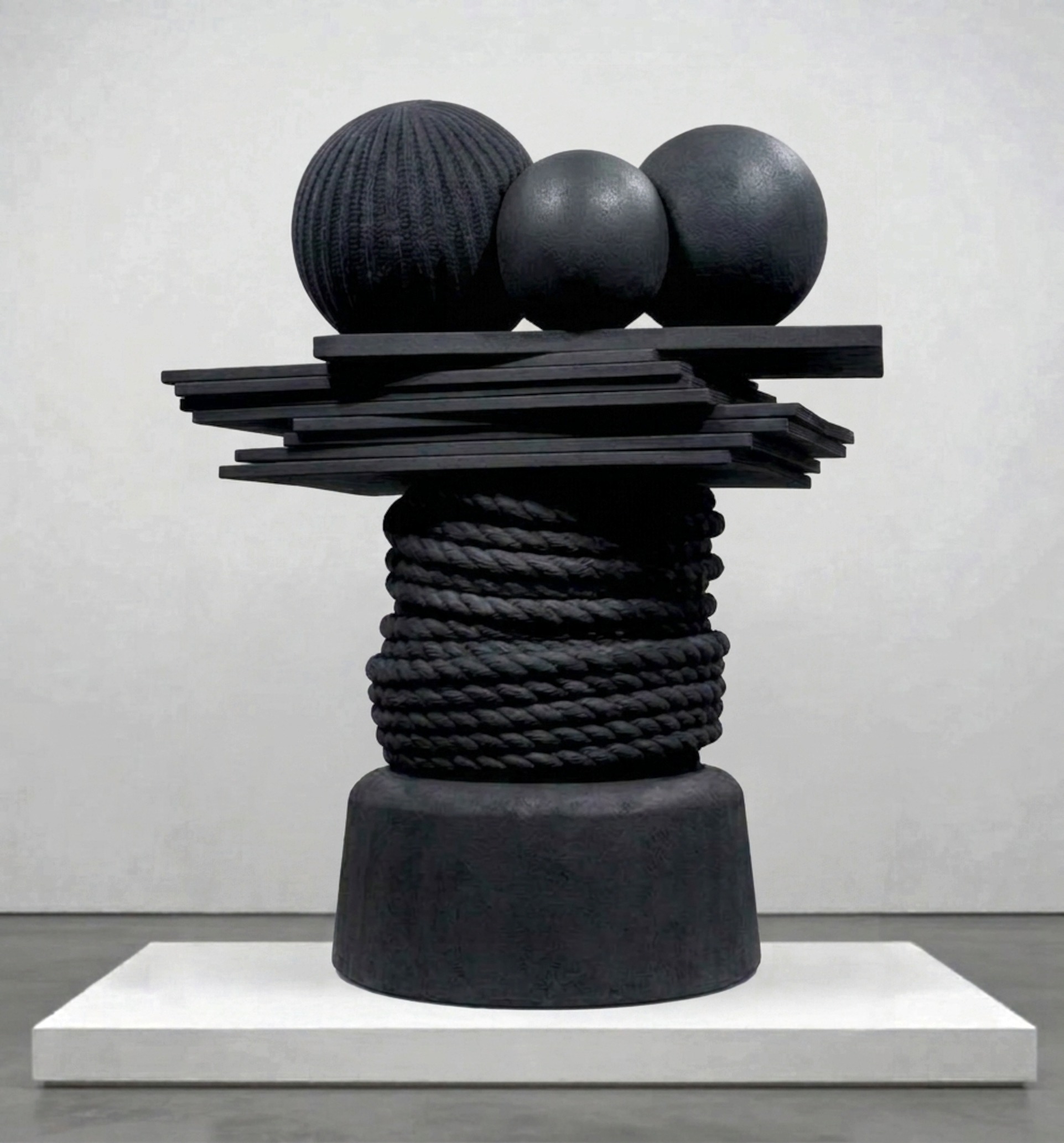
Sedimentum
2026. Household textiles, citrus and rope translated into monolithic form, with a compressed central sphere.
Photomontage by the artist, based on an existing physical model.
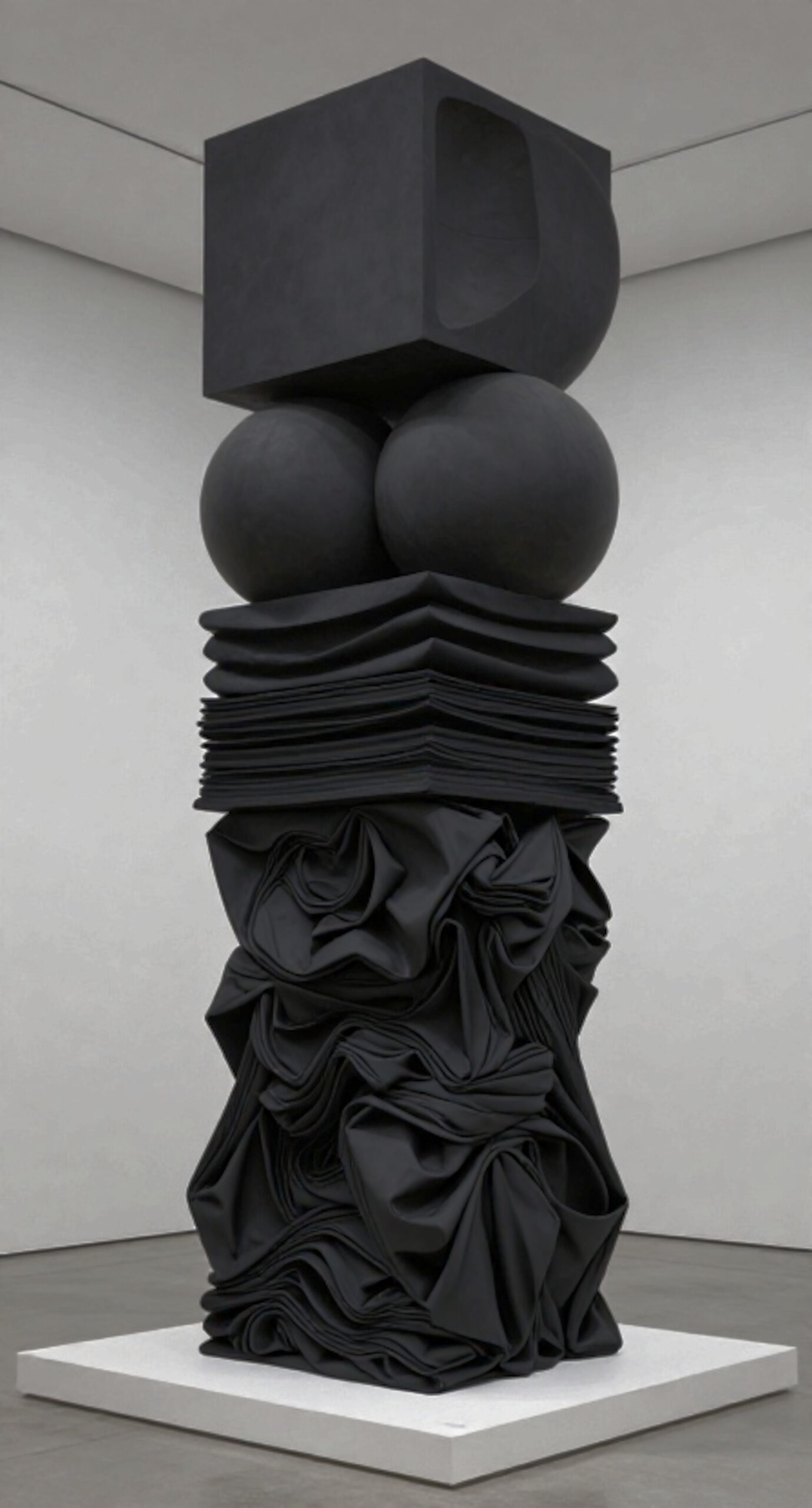
Impressio
2025–2026. A sphere forms a concave hollow within an overhanging cubic mass.
Photomontage by the artist, based on an existing physical model.
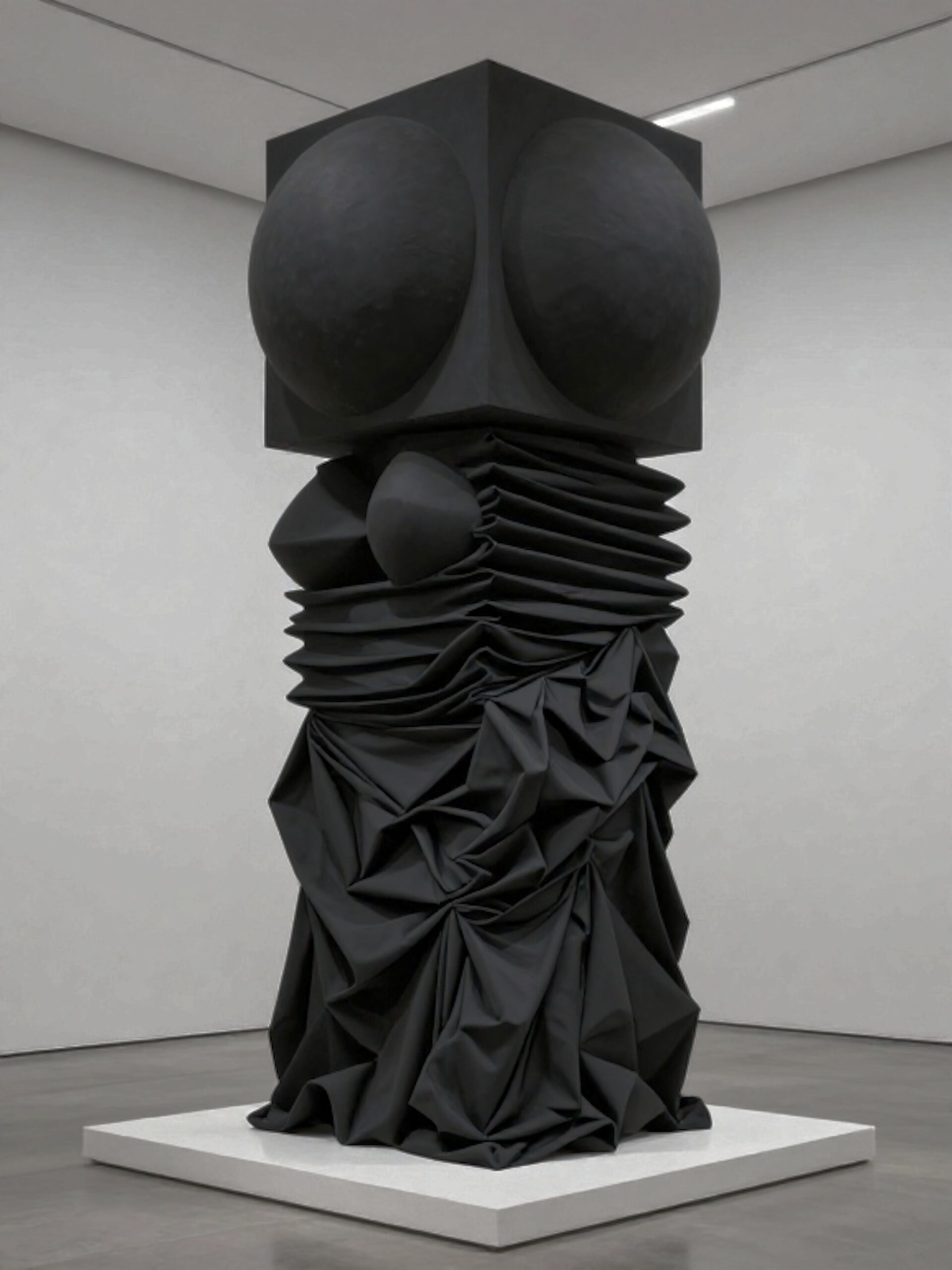
Inclusio
2025–2026. Spheres sink into pleated strata beneath a swelling convex cube.
Photomontage by the artist, based on an existing physical model.
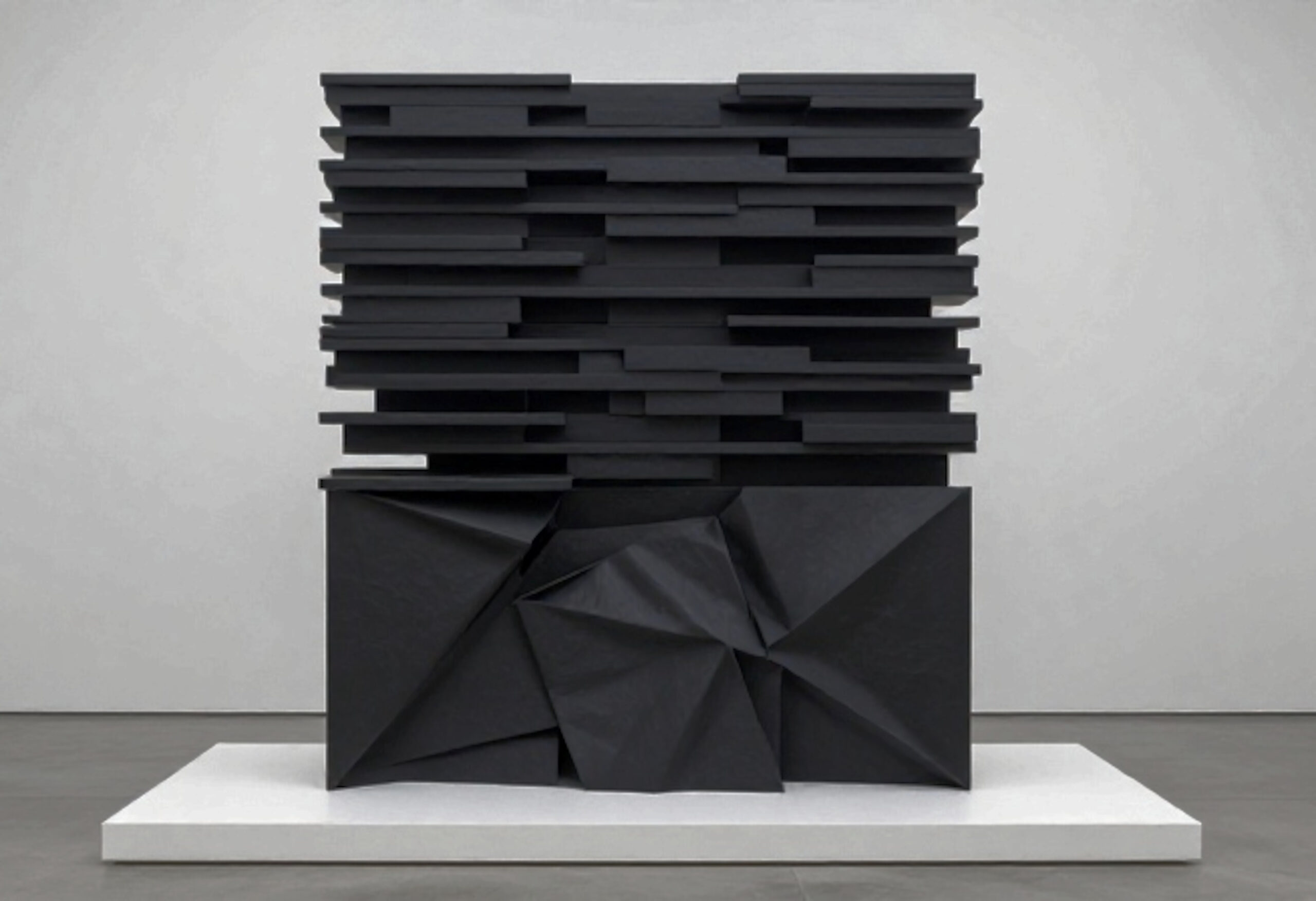
Tria Strata
2025–2026. A fractured black stack balanced on a faceted monolithic base.
Photomontage by the artist, based on an existing physical model.
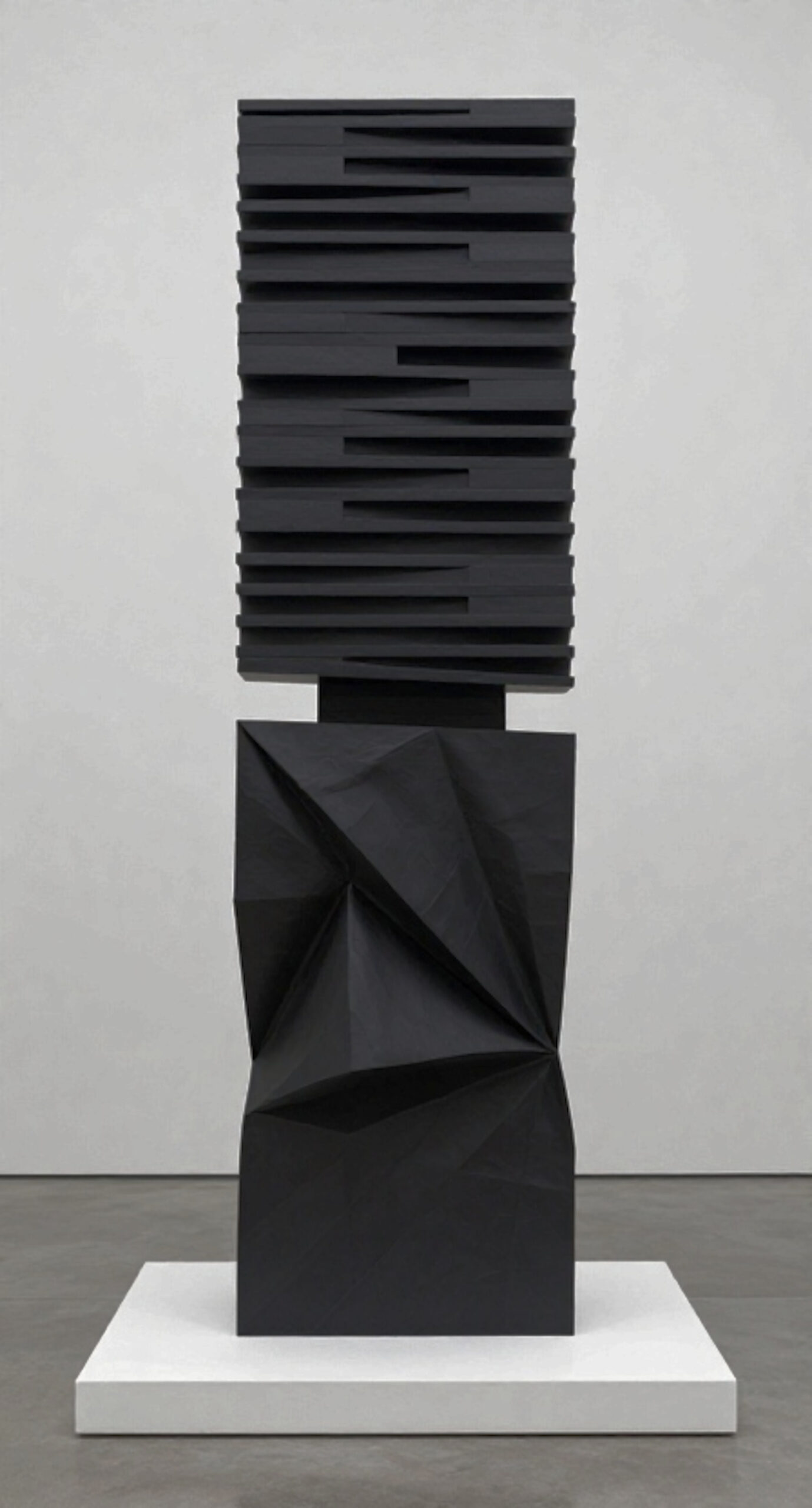
Incisio
2025–2026. Tall stratified black layers carved with tapering cuts, anchored on a faceted block.
Photomontage by the artist, based on an existing physical model.
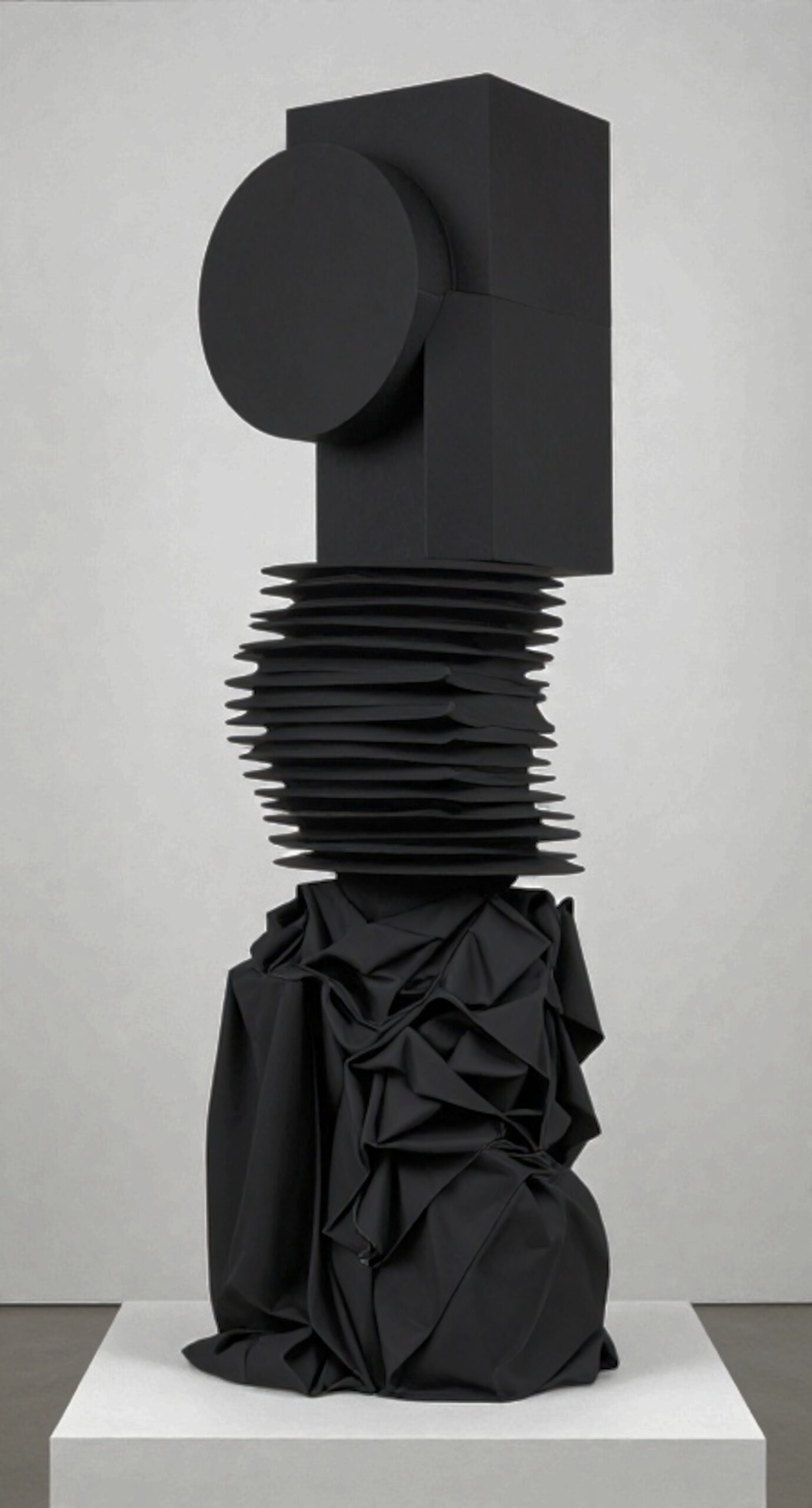
Unda
2025–2026. A cubic box and disc apply off-centre weight, bending black discs over drapery.
Photomontage by the artist, based on an existing physical model.
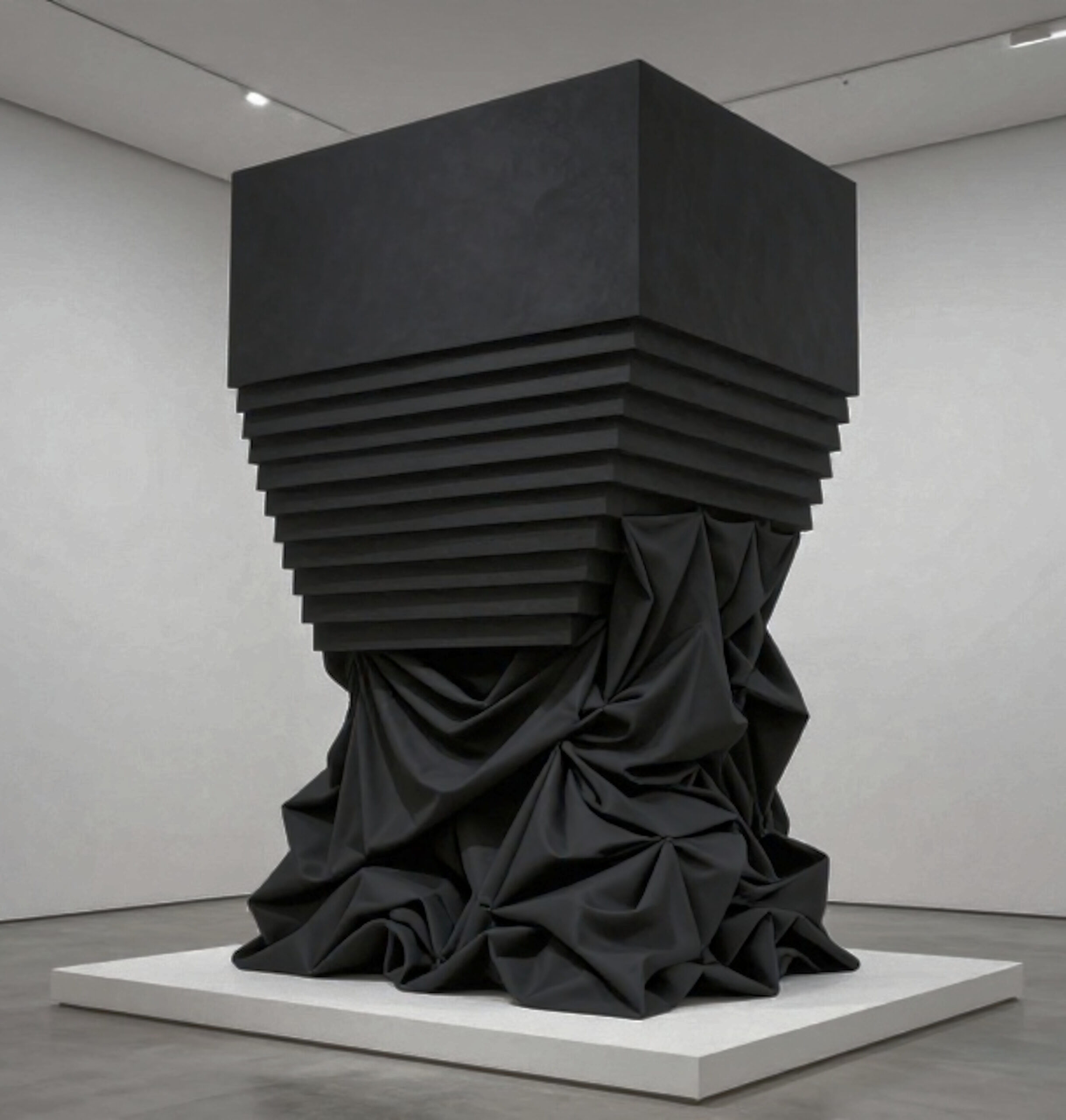
Onus
2025–2026. A heavy block resting on inverted strata over compressed drapery. Built on site for each exhibition.
Photomontage by the artist, based on an existing physical model.
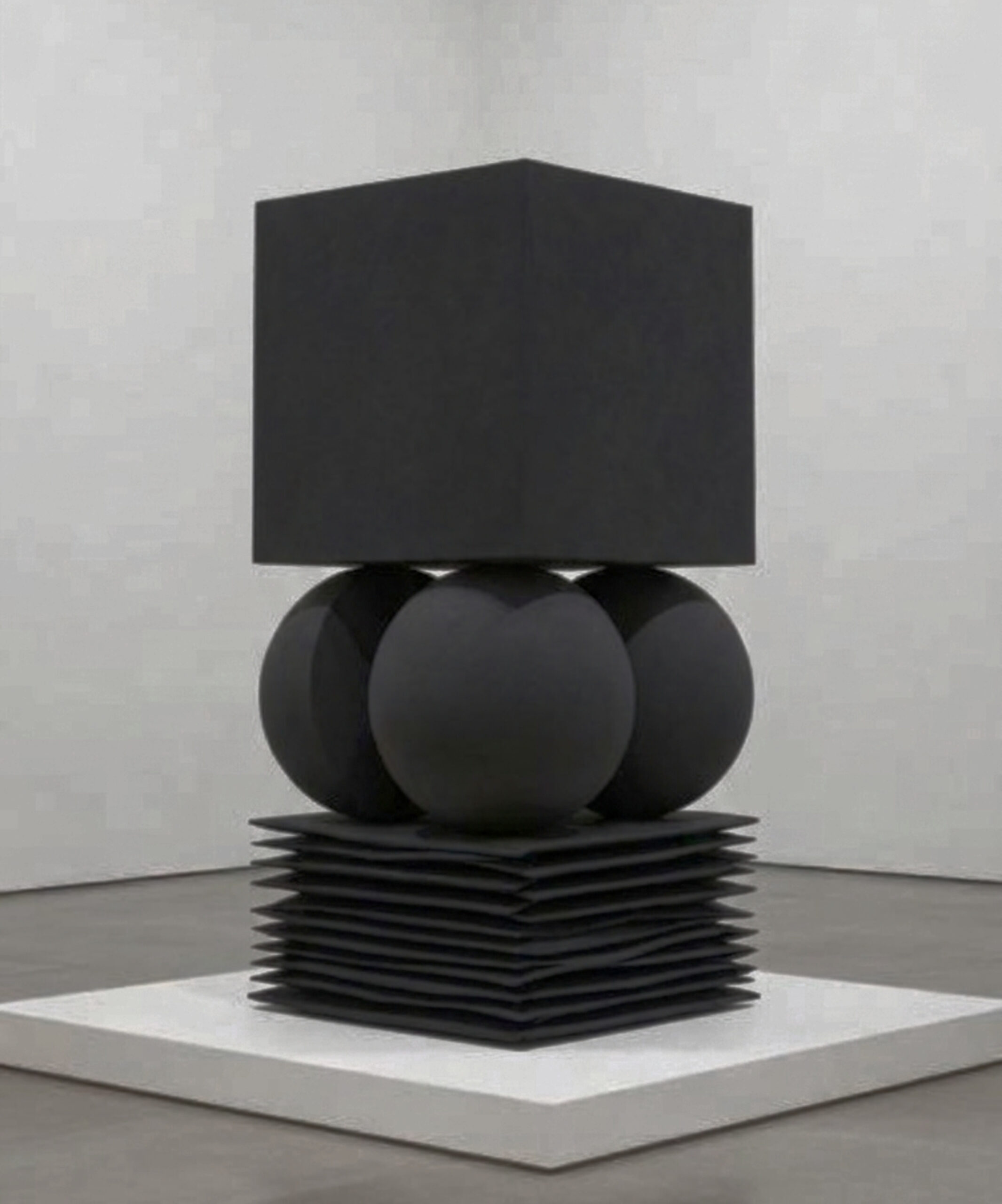
Strata Nuda
2025–2026. Weight resting directly on stratified layers, without drapery.
Photomontage by the artist, based on an existing physical model.
Selected works, 2024
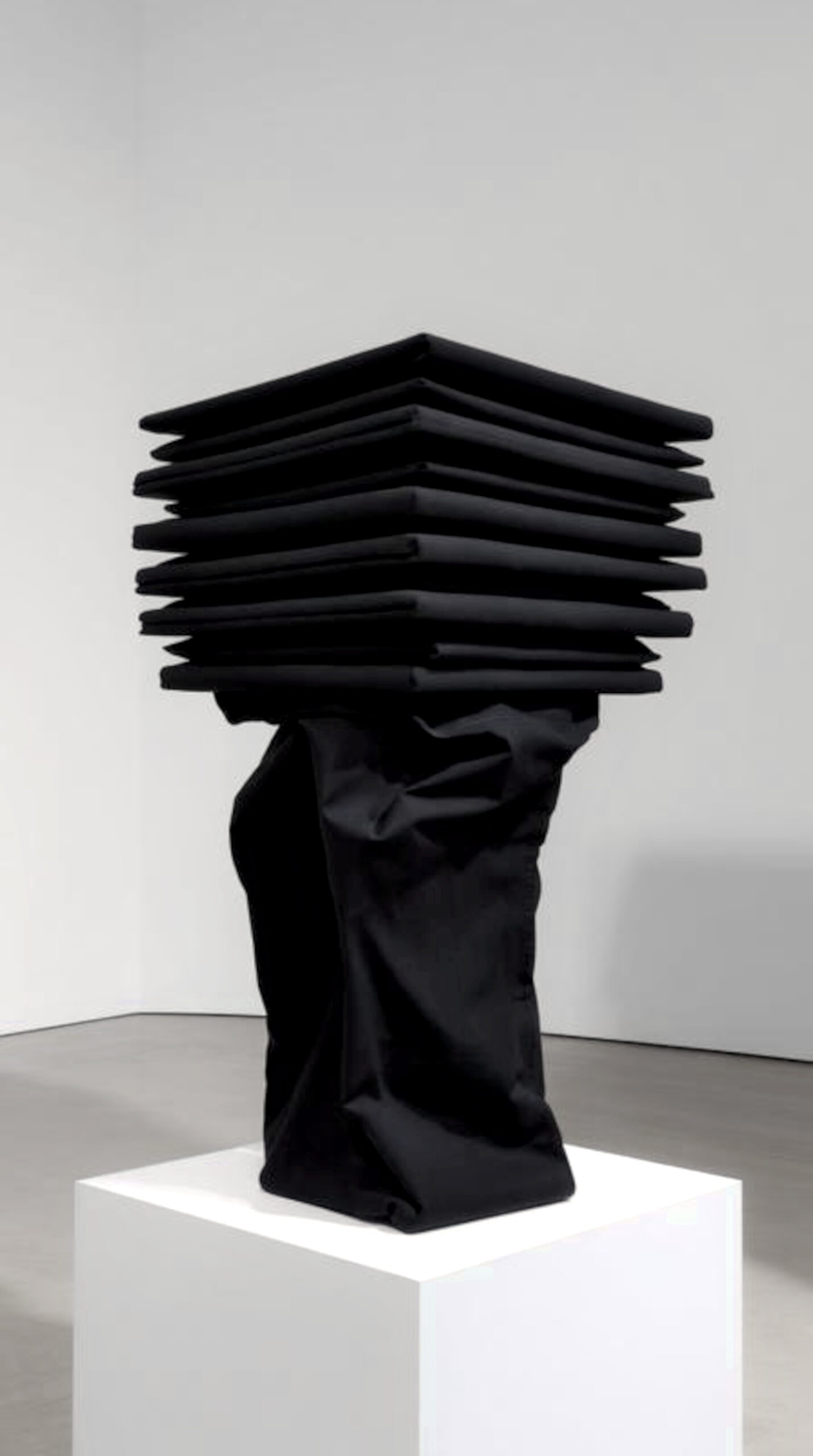
Strata
2024. Model. Featured in Art Market Magazine no. 111 (March 2026).
Stratum
2024. An early study in layered gravitational weight.
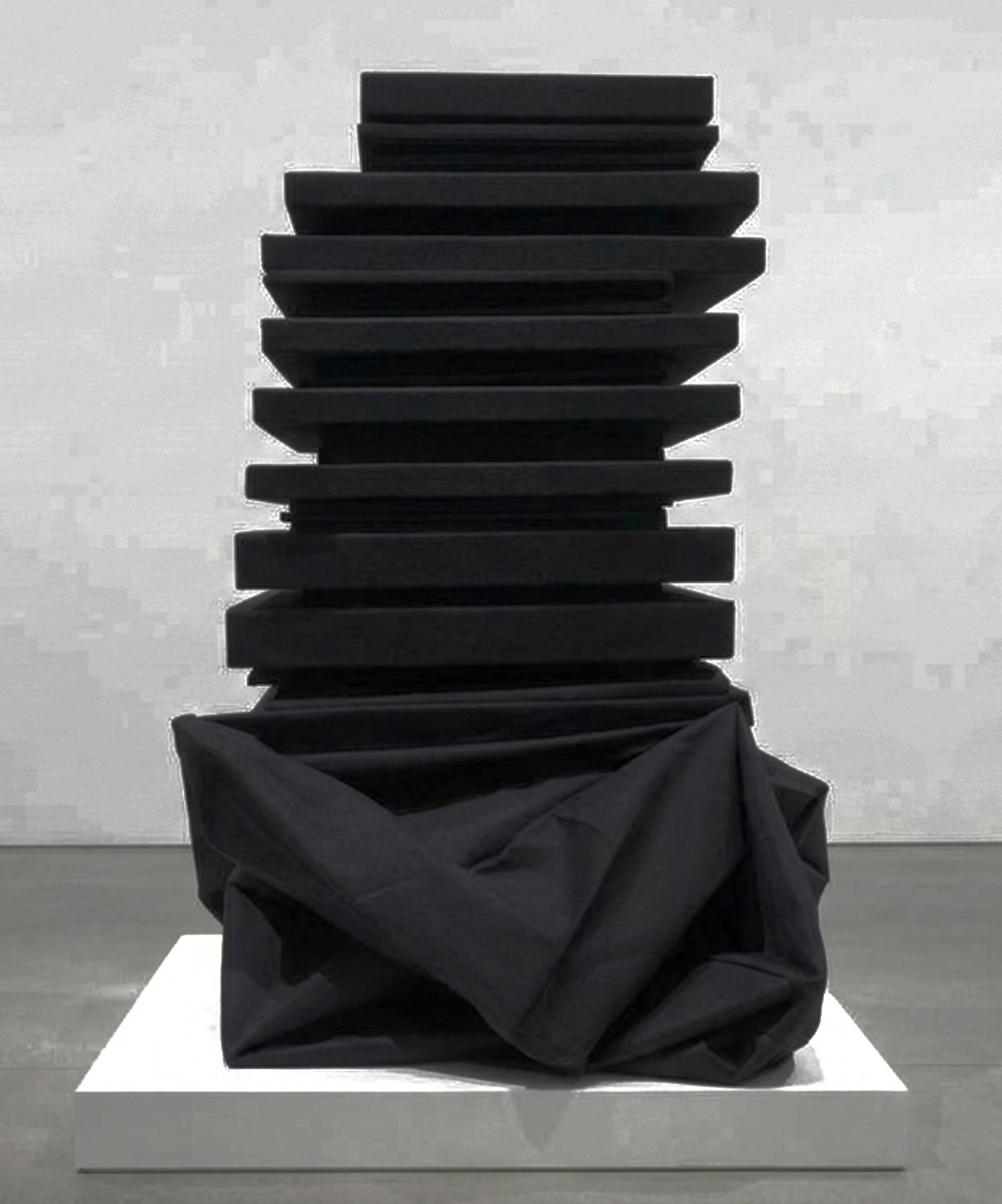
Stratus
2024. Model, rising, in the artist’s words, “like a cloud”.
Art-historical lineage
The series joins Northern Renaissance sources, Dürer’s drapery, Bruegel’s monumental weight and Bosch’s surreal assemblies, with a pragmatic view of contemporary machine methods, cut by computer and laser, seeing them as continuous chapters of art history rather than a break from tradition.
“I am nostalgic of course, but not dogmatic. We have to move on, and this is what I am doing. So there are two ways, traditional or contemporary; both are art history.”
ZT Tosha, November 2026
