Aperture Set 01
On the Discipline of Revelation
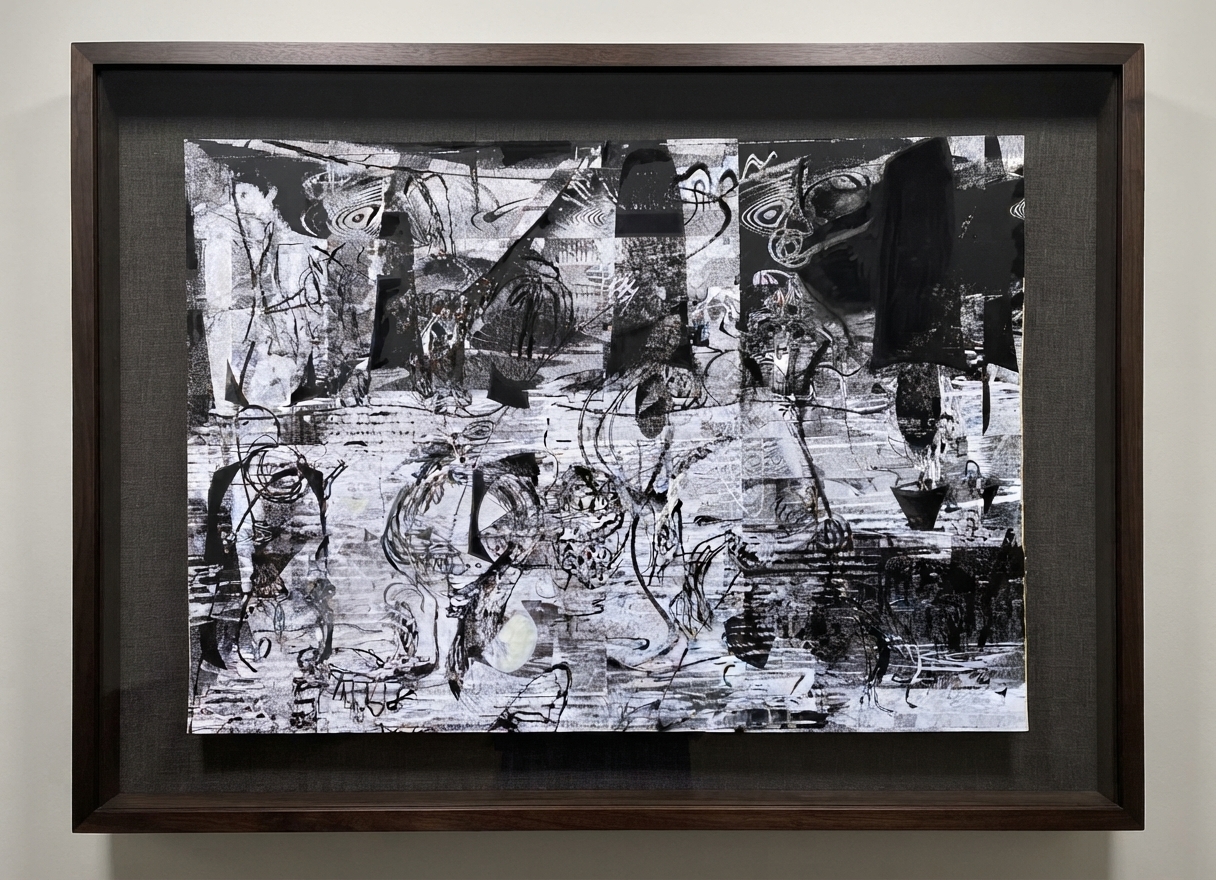
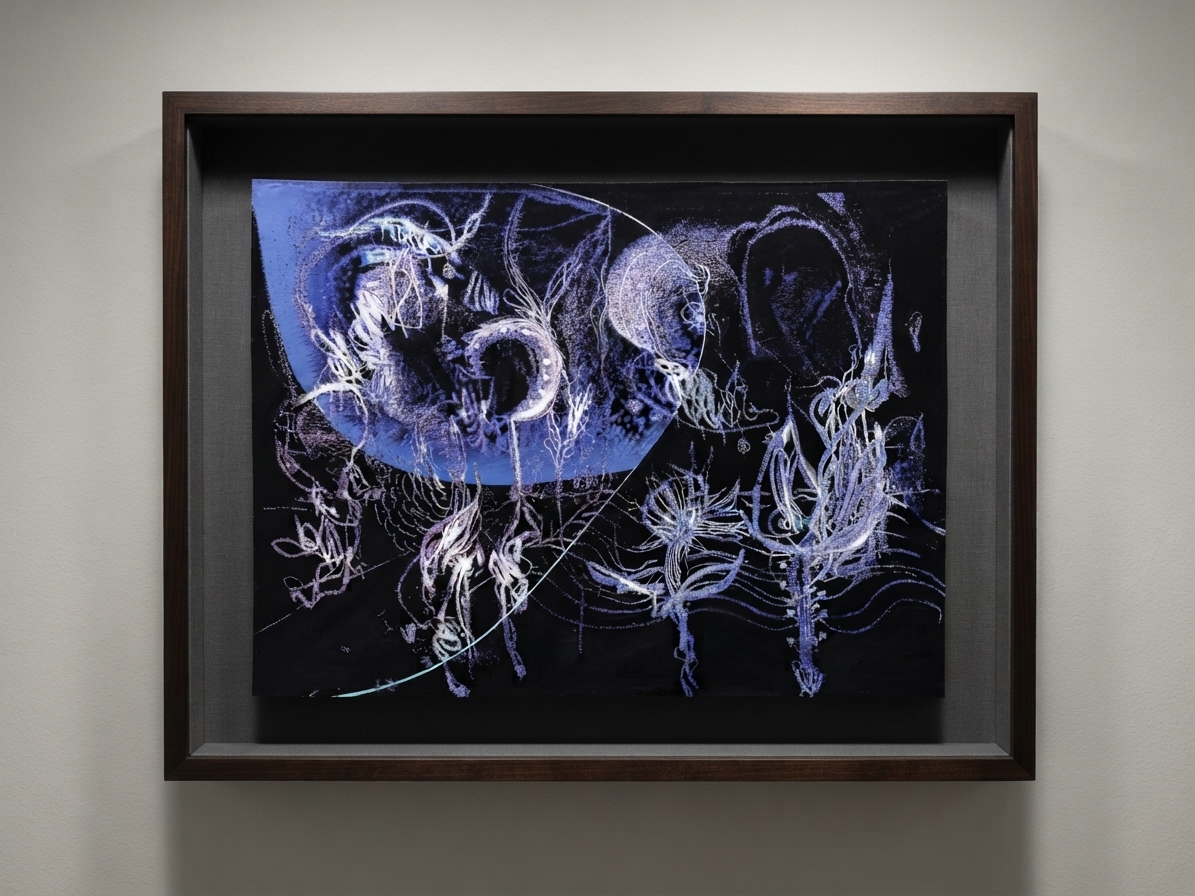
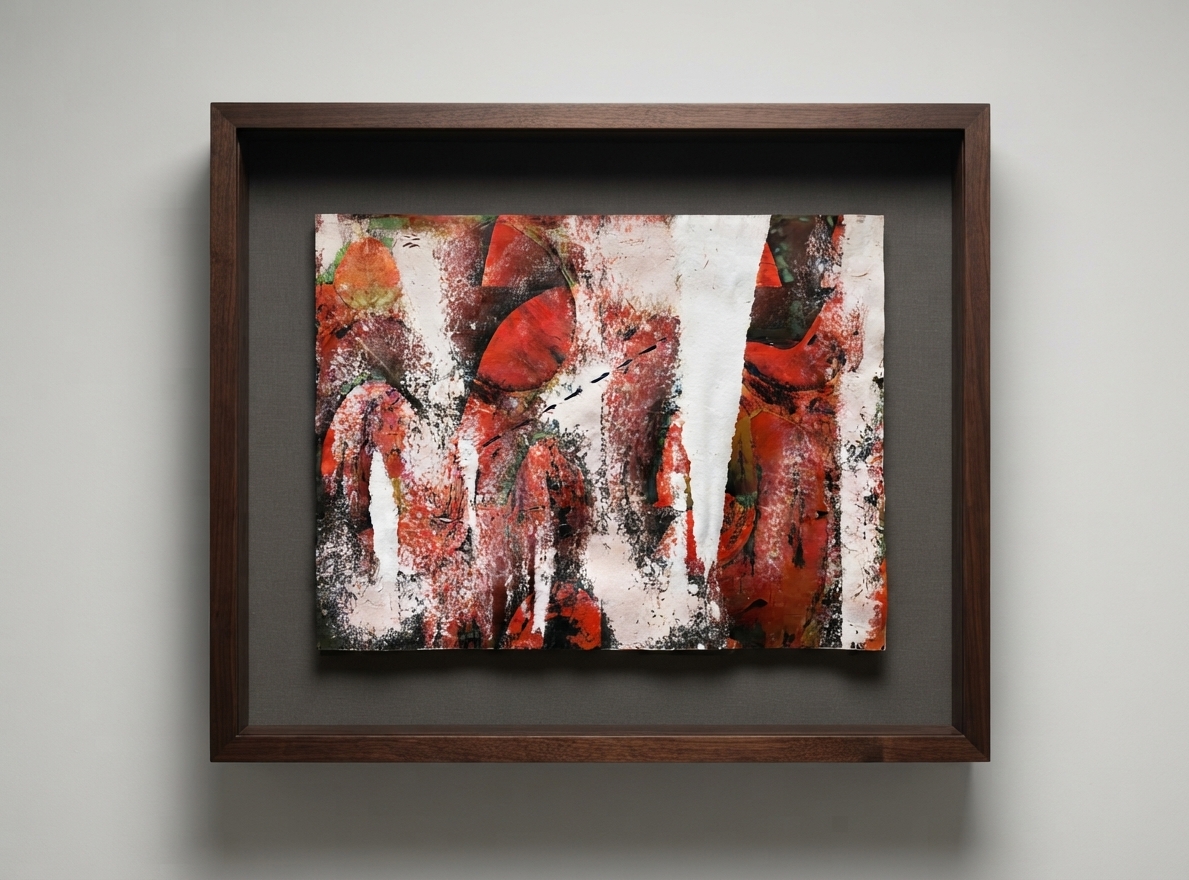
Aperture Set 01 consists of eight works that examine the threshold between what is visible and what remains concealed. Each begins with a photographic image and subjects it to a physical intervention. The image becomes the ground on which another act of looking takes place.
The series moves through a sequence of attention, concealment, search, rupture, measure, interference, and structure. Each work establishes a different condition of viewing while remaining part of a single spatial and material system.
The Architecture of the Installation
The eight works are arranged in two rows of four, forming a single spatial composition. Consistent alignment and spacing maintain the unity of the installation.
The grid establishes a measured framework for the individual works. Their uniform framing creates a common architectural condition, while the varied surfaces distinguish one work from another.
The installation is encountered first as a whole and then through its individual surfaces. Distance establishes the order of the set; proximity reveals the material differences within it.
The Sequence
The order of Aperture Set 01 is deliberate. The works move from the recognition of an image toward increasingly physical forms of alteration, ending with a more contained and structural condition.
01 — Kriegsministerium
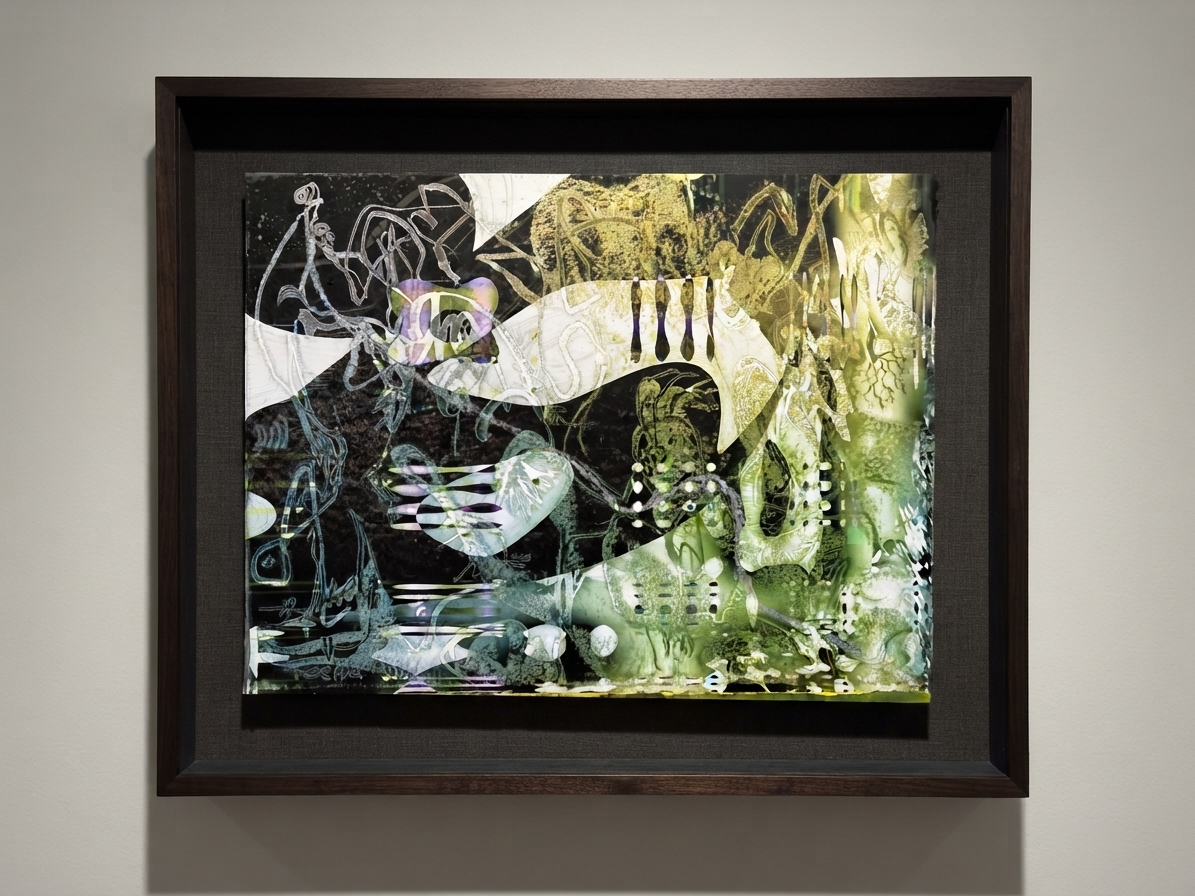
Kriegsministerium introduces the series through an image carrying historical and institutional associations. The photographic source remains legible while its surface is altered, establishing the tension between image and intervention that underlies the set.
02 — Memory Surfaces
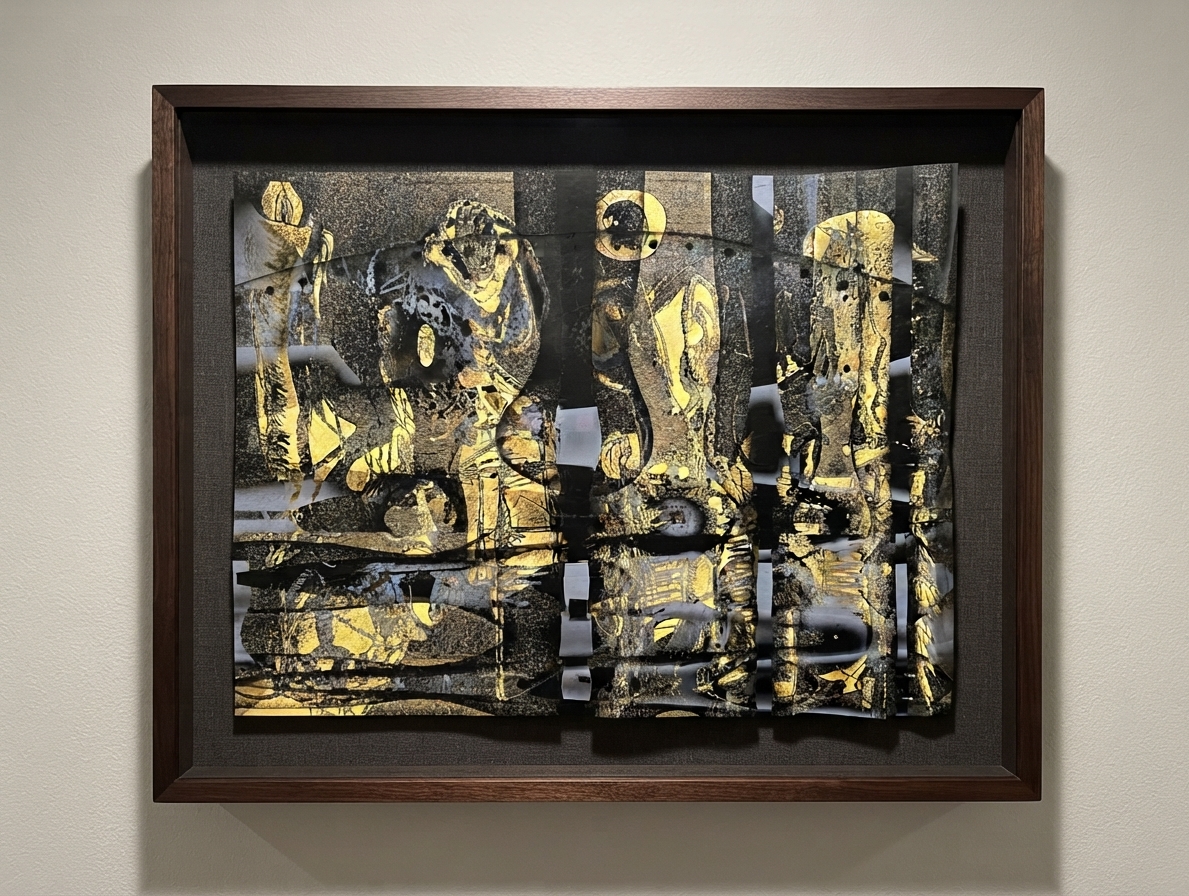
Memory Surfaces shifts attention toward recollection and the partial availability of the image. What can be seen and what remains beneath the surface occupy the same field.
03 — Looking for Right Angle
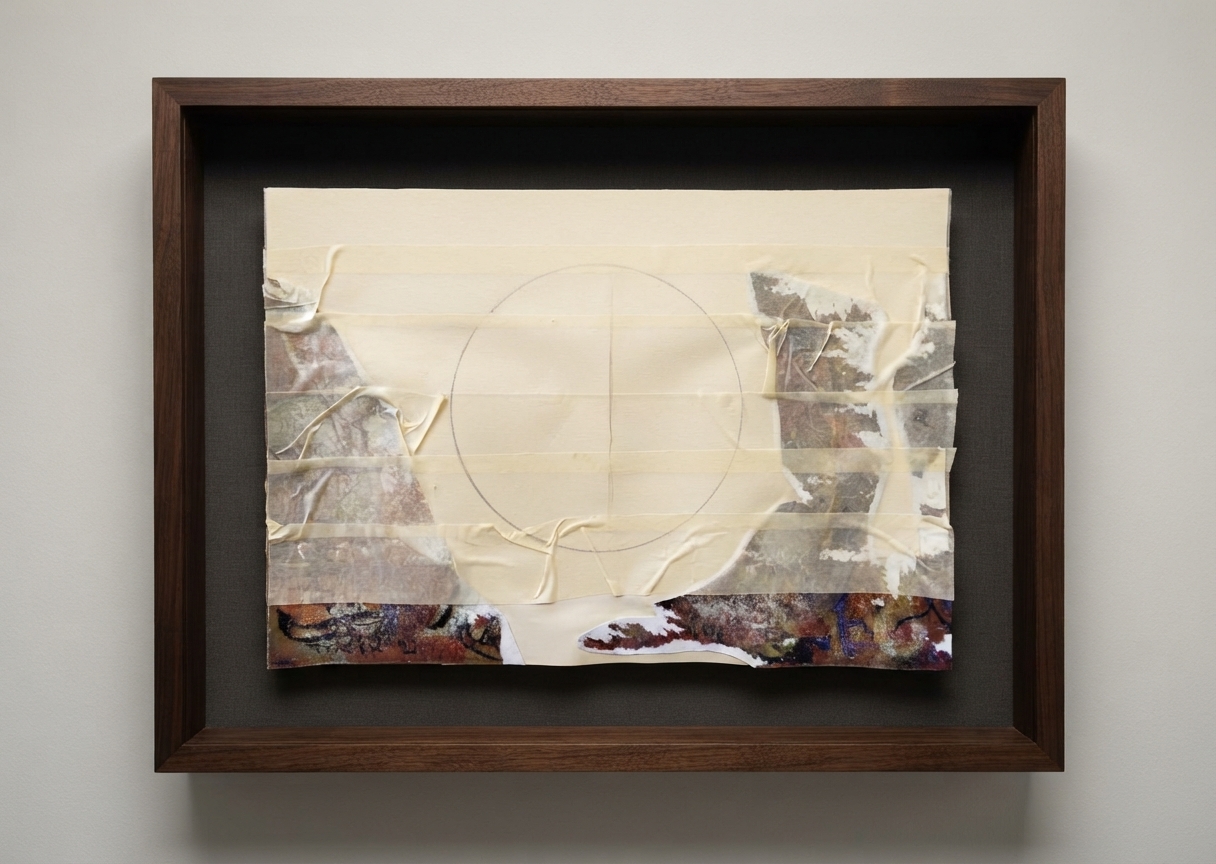
Looking for Right Angle introduces geometry as a means of orientation. The search for alignment becomes part of the act of looking.
04 — Occlusion
Occlusion places concealment at the centre of the image. Portions of the photographic source remain present through fragments and interruptions.
05 — Tear
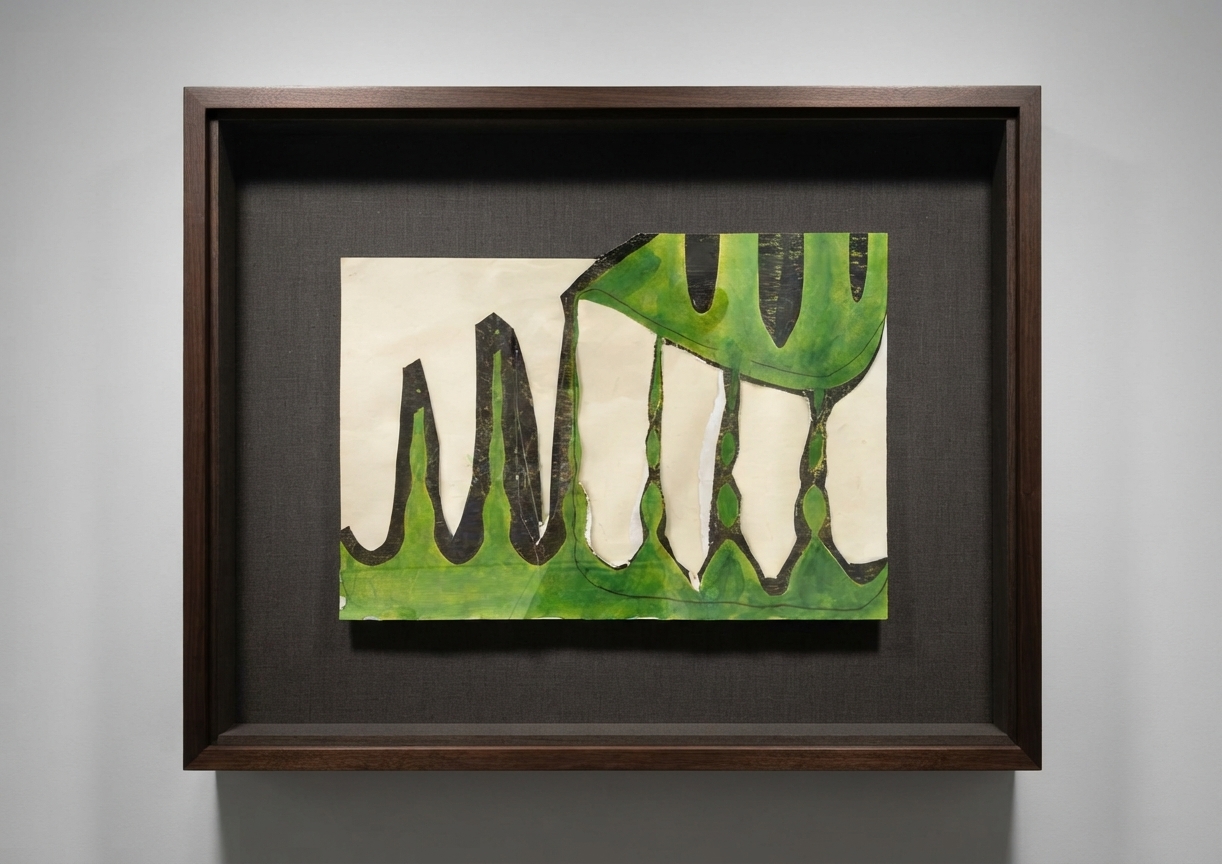
Tear brings rupture directly into the physical surface. The distinction between image and object becomes increasingly difficult to maintain.
06 — Tailoring
Tailoring introduces cutting, joining, and adjustment. The image is treated as something that can be materially shaped rather than simply viewed.
07 — Hatching
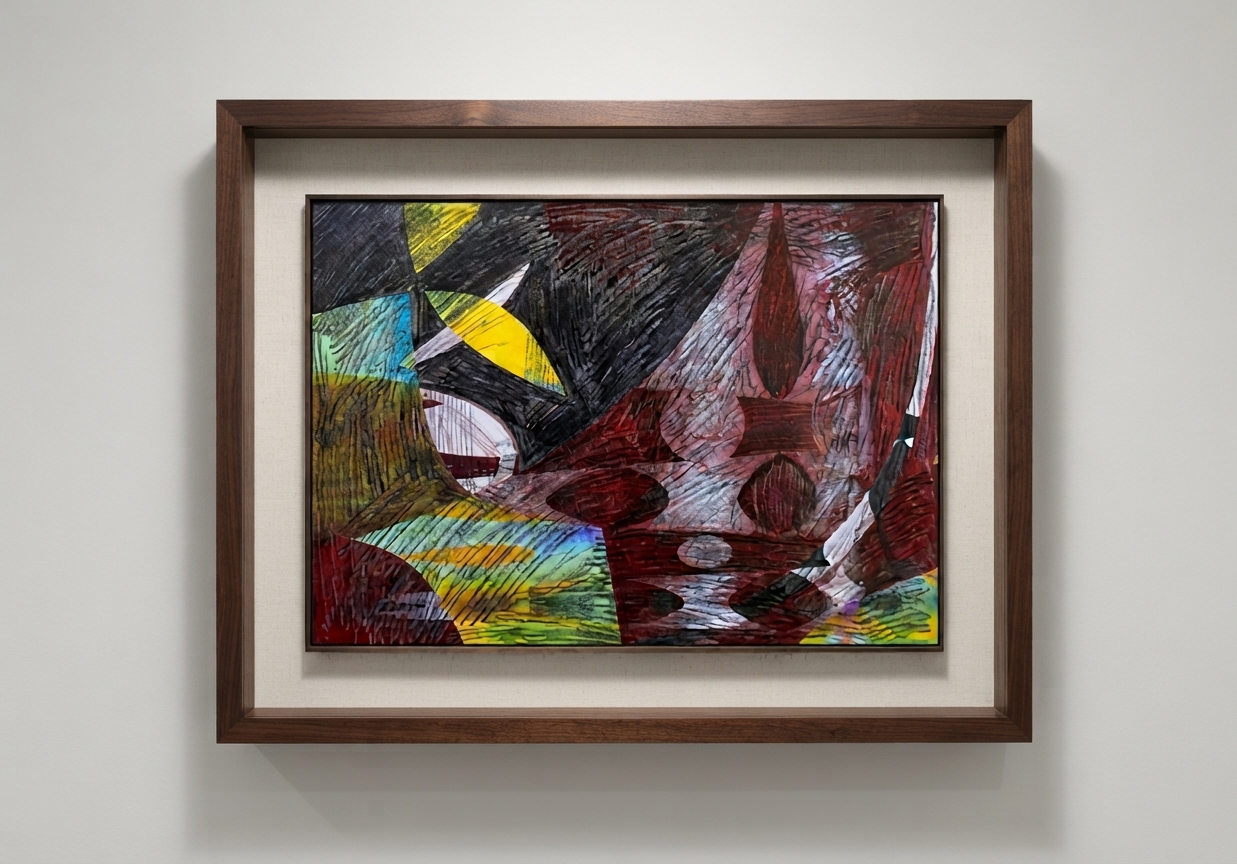
Hatching builds the surface through repeated marks. The accumulation alters the visibility of the photographic source without entirely displacing it.
08 — Cell
Cell concludes the sequence with a more contained structural condition. The image is held within a defined visual unit, bringing the movement of the series toward enclosure.
Material and Object Status
The works are fine art prints on Hahnemühle Photo Rag paper, each measuring 40 × 30 cm. Individual works incorporate mixed-media interventions including watercolor, black tempera, graphite, wax, sanding, tearing, cutting, layering, and tape.
Each work is mounted on white mat paper and board and uniformly framed in black profiles measuring 50 × 40 cm. The shared format provides the physical continuity of the set while allowing the individual surfaces to remain distinct.
Photography Note
Photography Note: Some artworks may appear slightly larger or smaller than others in the photographs. This is due to differences in camera position, perspective, and lighting during documentation; the apparent differences do not reflect differences in the actual dimensions of the works.