About · ZT Tosha · 1987–2026
ZT Tosha
ZT Tosha (Zoran Tošić, born 1961 in Mostar) is an Amsterdam-based artist working across sculpture, drawing, painting, installation, performance, sound and writing. He studied at the Academy of Fine Arts in Sarajevo and has lived in the Netherlands since the late 1980s, with periods in London and New Haven.
His work returns to one question: what remains of a form after the conditions that produced it have been altered?
Timeline
1987–1989 · Sarajevo
Sculpture, printmaking
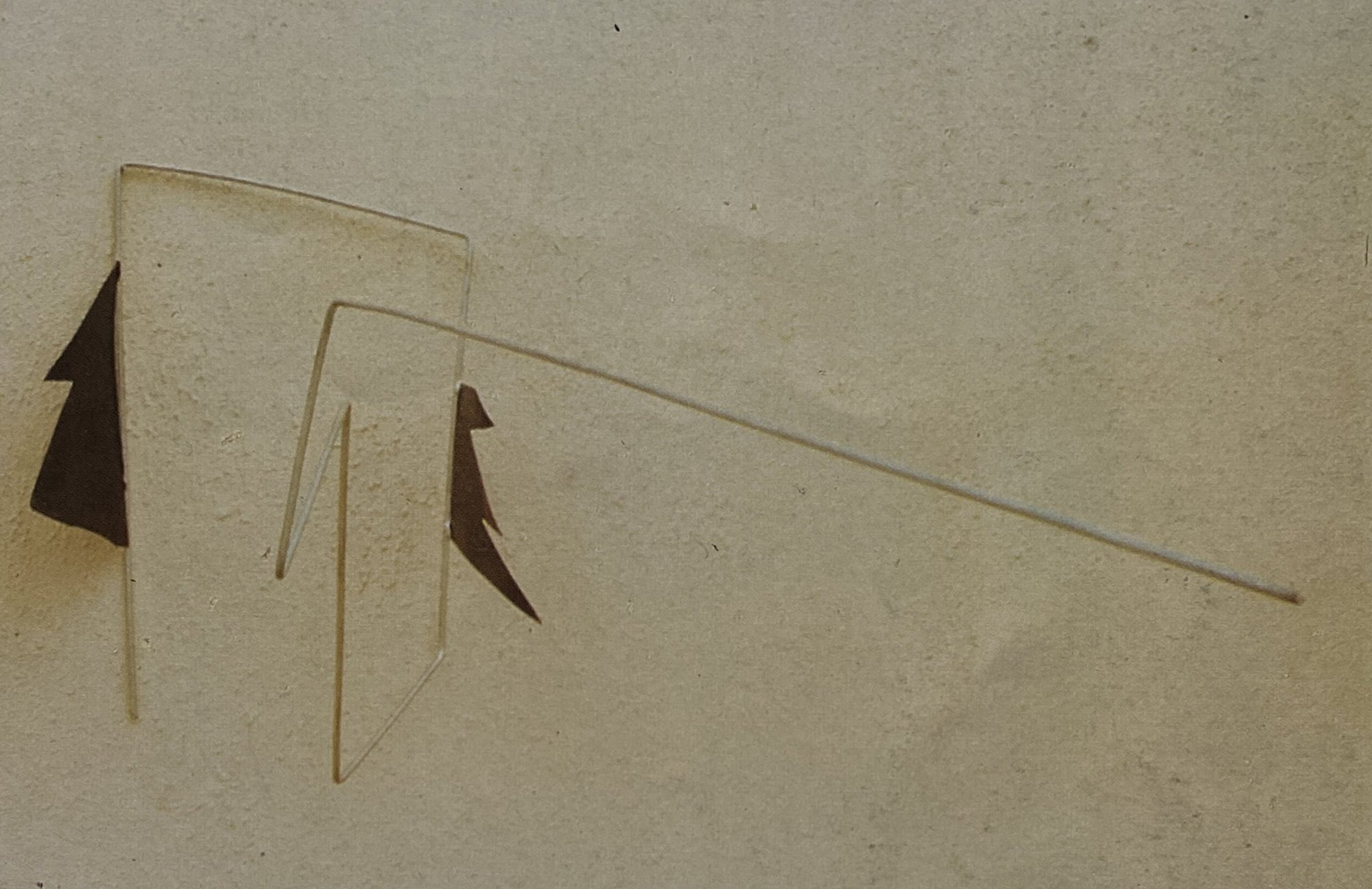
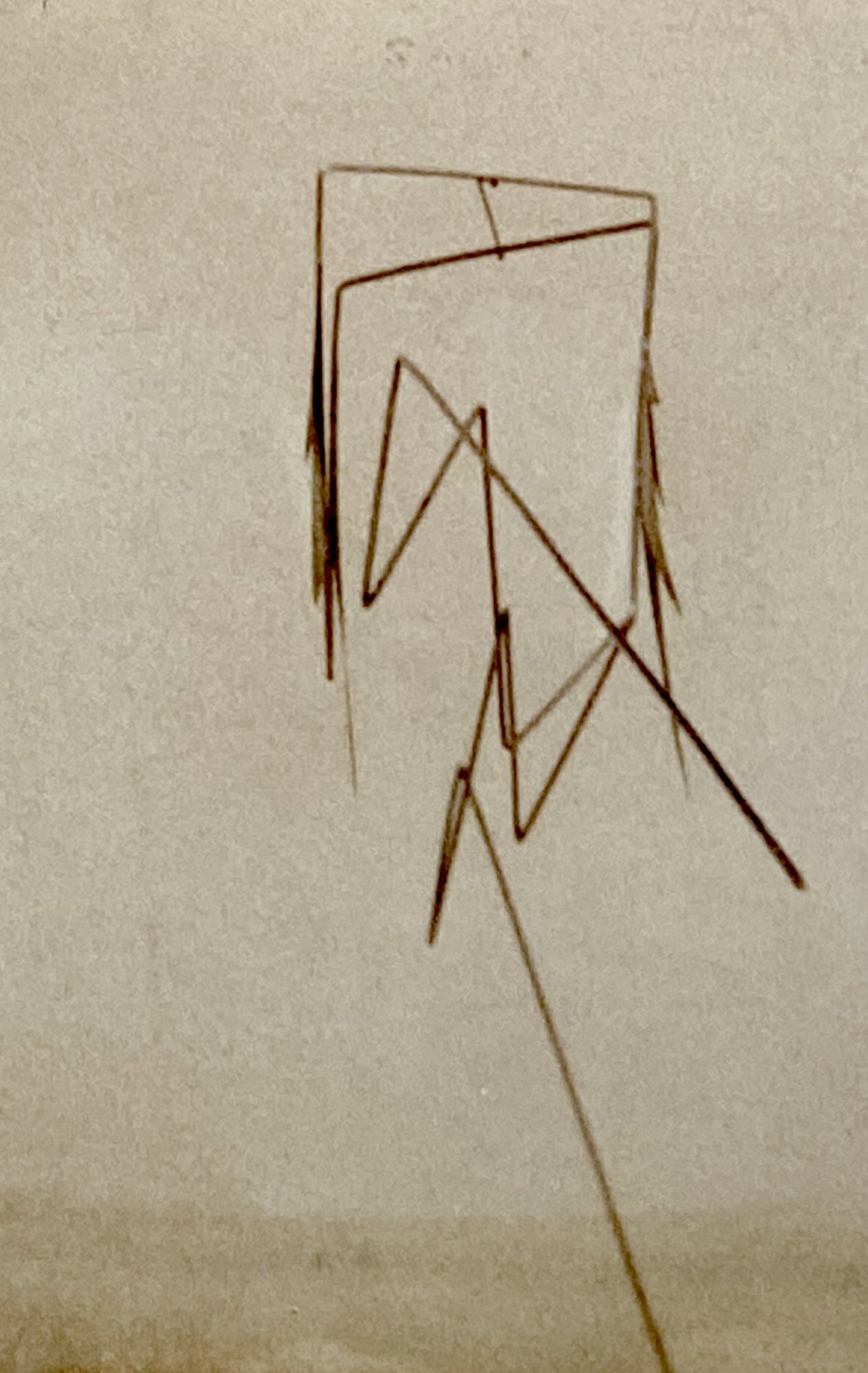
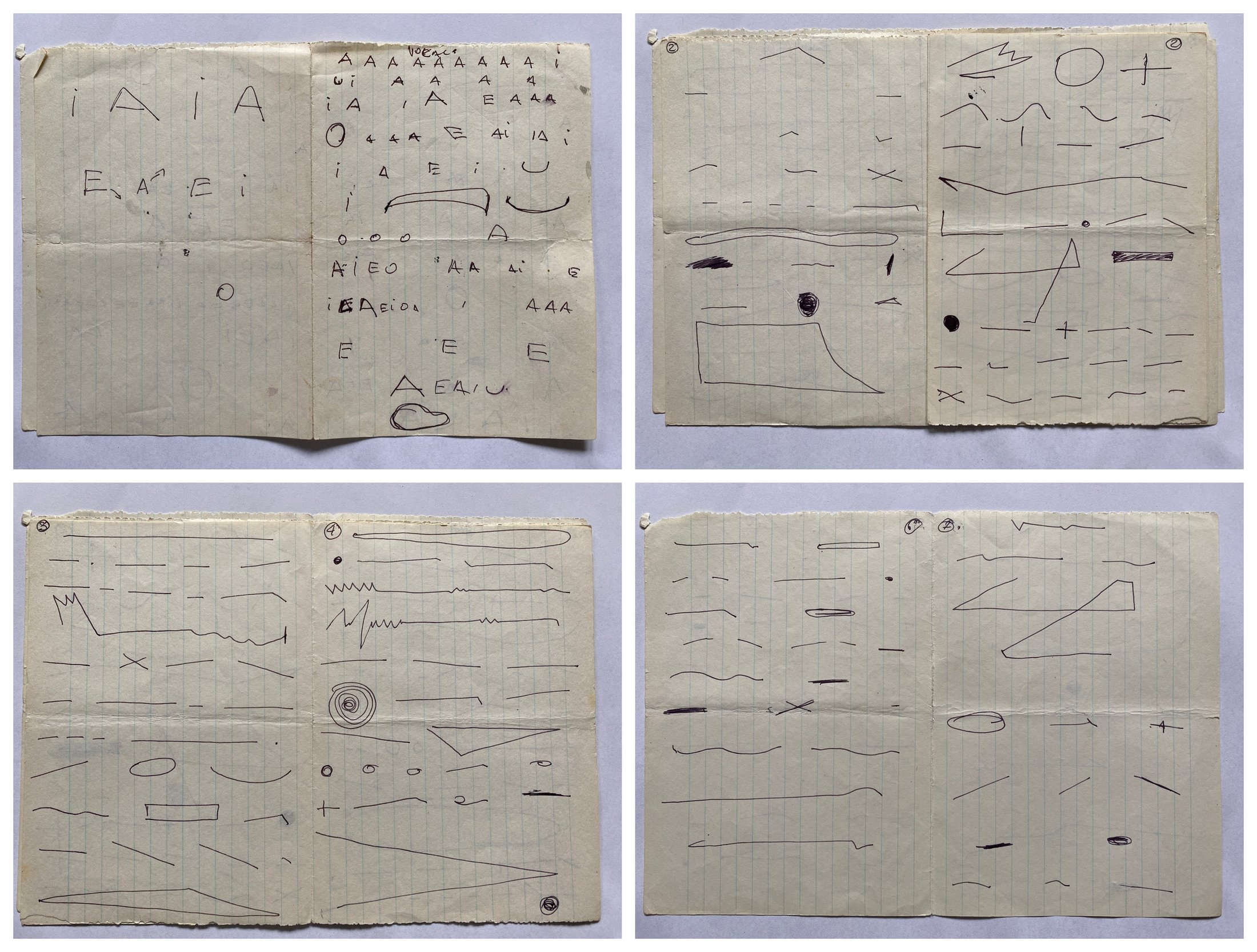
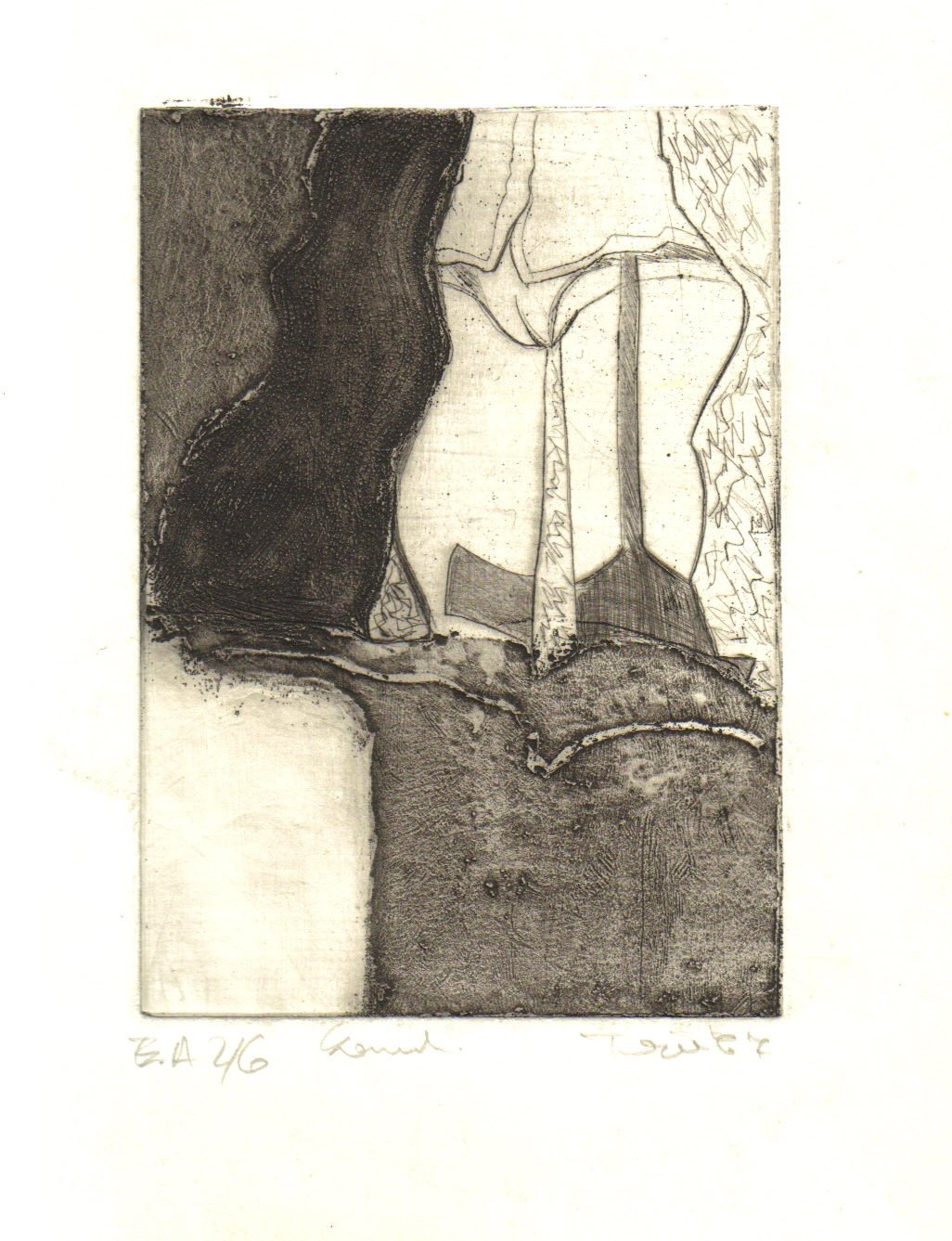
As a student he made Bez naziva (Untitled, 1987): a bent iron rod drawing a line more than four metres across the wall, with two cut sheet-metal forms. The line traces the flight of the ball in the 1987 Wimbledon final between Pat Cash and Ivan Lendl. With the sound installation Novi odnos unutar jezika (A New Relation Within Language, 1989), a cube of two metres in which a cassette player looped recorded sounds day and night, it was shown in Yugoslav Documents ’89 at Skenderija, Sarajevo (catalogue p. 265). His handwritten score for the recording survives. From the same years come his etchings, several surviving as artist’s proofs.
1990–1992 · The Netherlands
Performance, sound
In January 1990 he took part in Electro Art at the Vestzaktheater in Enschede, a performance evening with video and sound reviewed in the local press. Later that year he opened the Inkt Grafiekbiënnale intermezzo in The Hague with a performance on a bicycle. In March 1992 he presented the audio performance To the East of Japan at the EKKO theatre in Utrecht.
1993–1995 · Drawings
Pencil, oil pastel, brush and ink
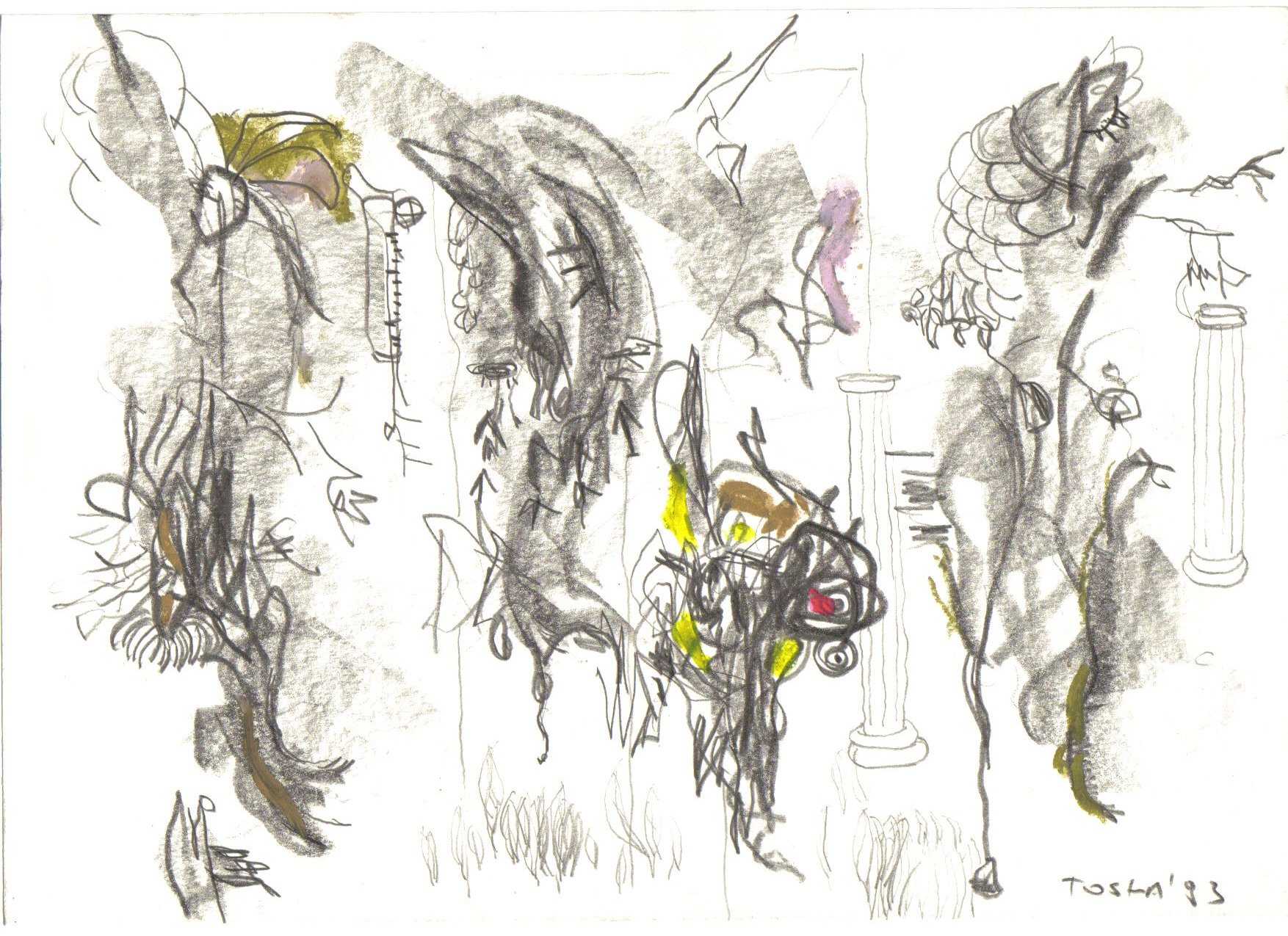
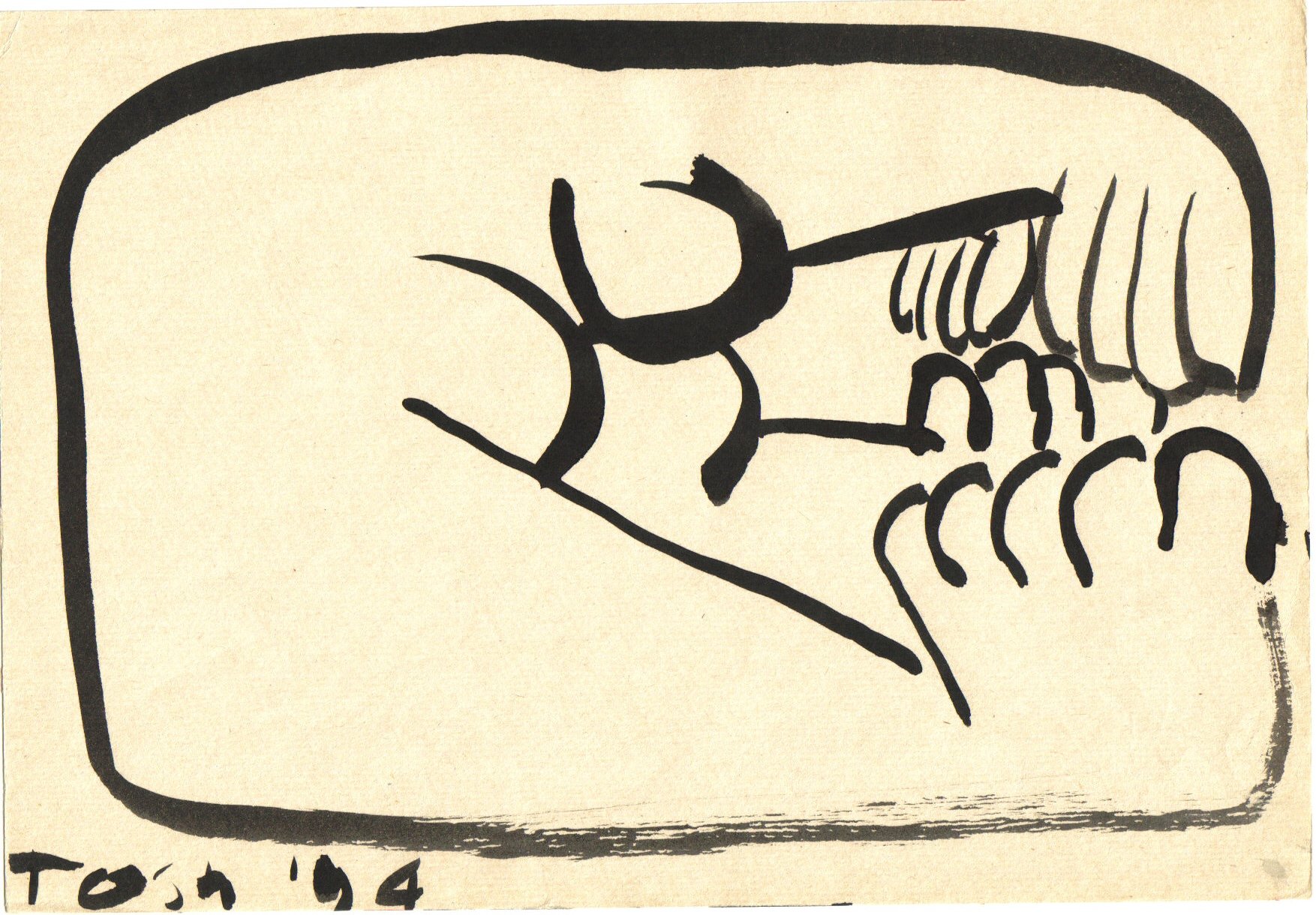
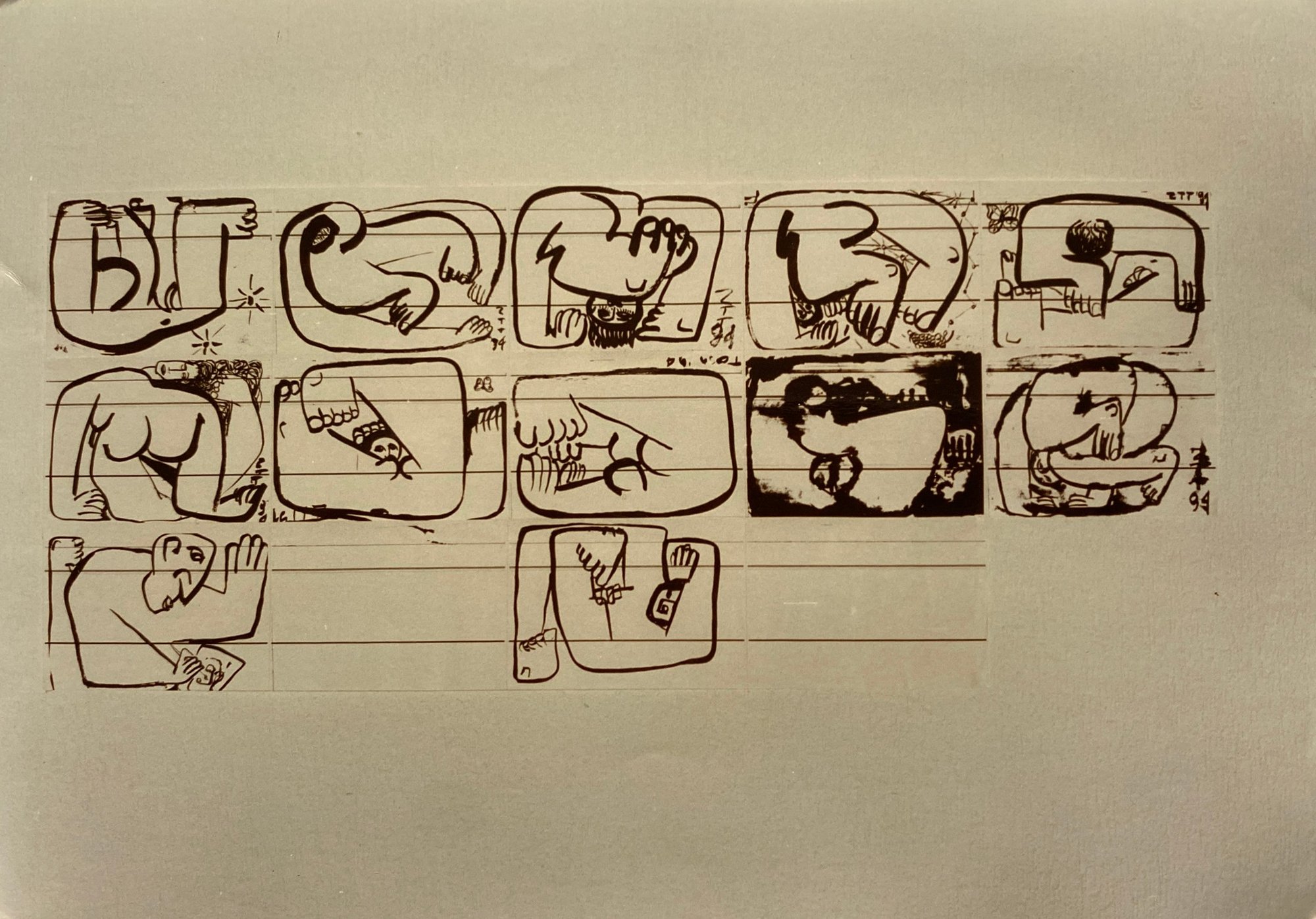
In Rotterdam in 1993, while Mostar was under siege, he made thirteen drawings, photographed them and then destroyed the originals. “I do not want to see those drawings anymore. I want to recall them from the memory, so that they can become new.” Only the photographs survive. Decades later they became the source of the series Aperture, printed and then reopened by hand. In 1994 and 1995 a new figure appears in brush and ink: a body folded into the rectangle of the sheet, hands and feet pressed against its edges.
1997 · London
Performance, installation, transmission
On 31 May 1997 he walked through London for three hours carrying a stone suspended from a T-shirt, from High Street Kensington to IN-PEAS in Vauxhall, where he placed it in an installation: a life-size clay figure partly encased in ice. Procession, the first piece of the cycle Forces of Circumstance, was on view until 24 June and listed in Art Monthly (no. 207).
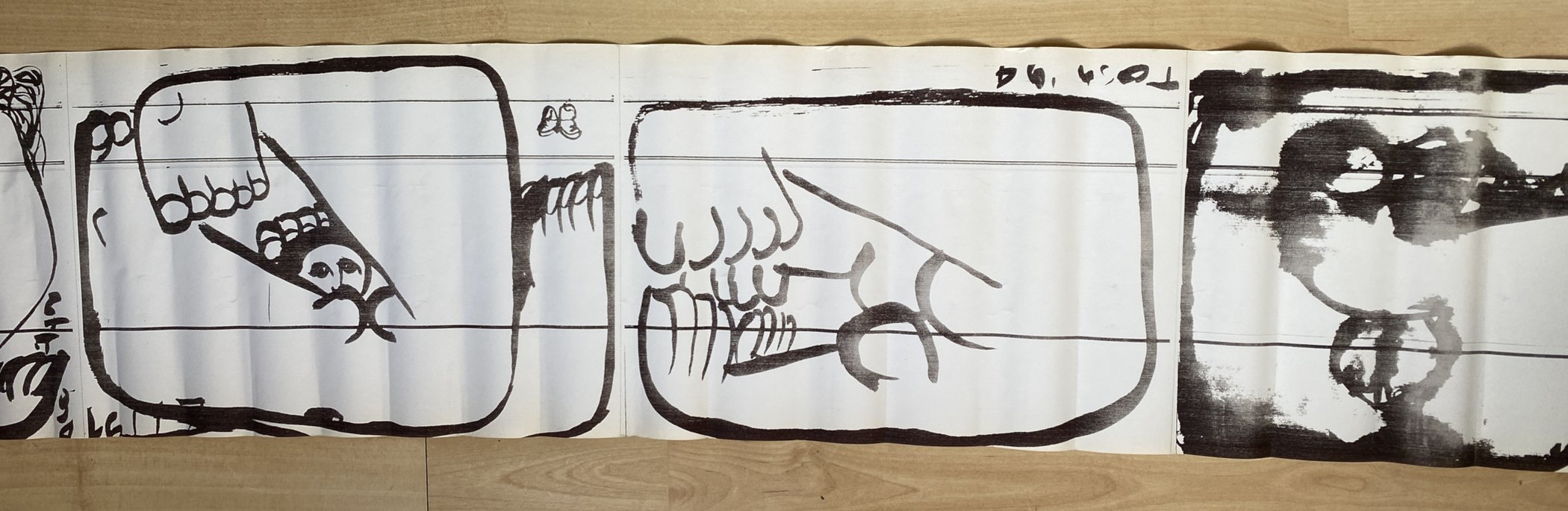
In September 1997 followed Fax me. / Fax paper.: brush drawings sent by fax to a gallery over twenty-four hours, in sessions, since a connection could not be held for long. At his end a photographer recorded the sessions; at the gallery end the drawings arrived on rolls of thermal paper, some upside down, crossed by scan lines. In the artist’s words: “All has happened in the wire.”
2000 · New Haven
Installation, painting
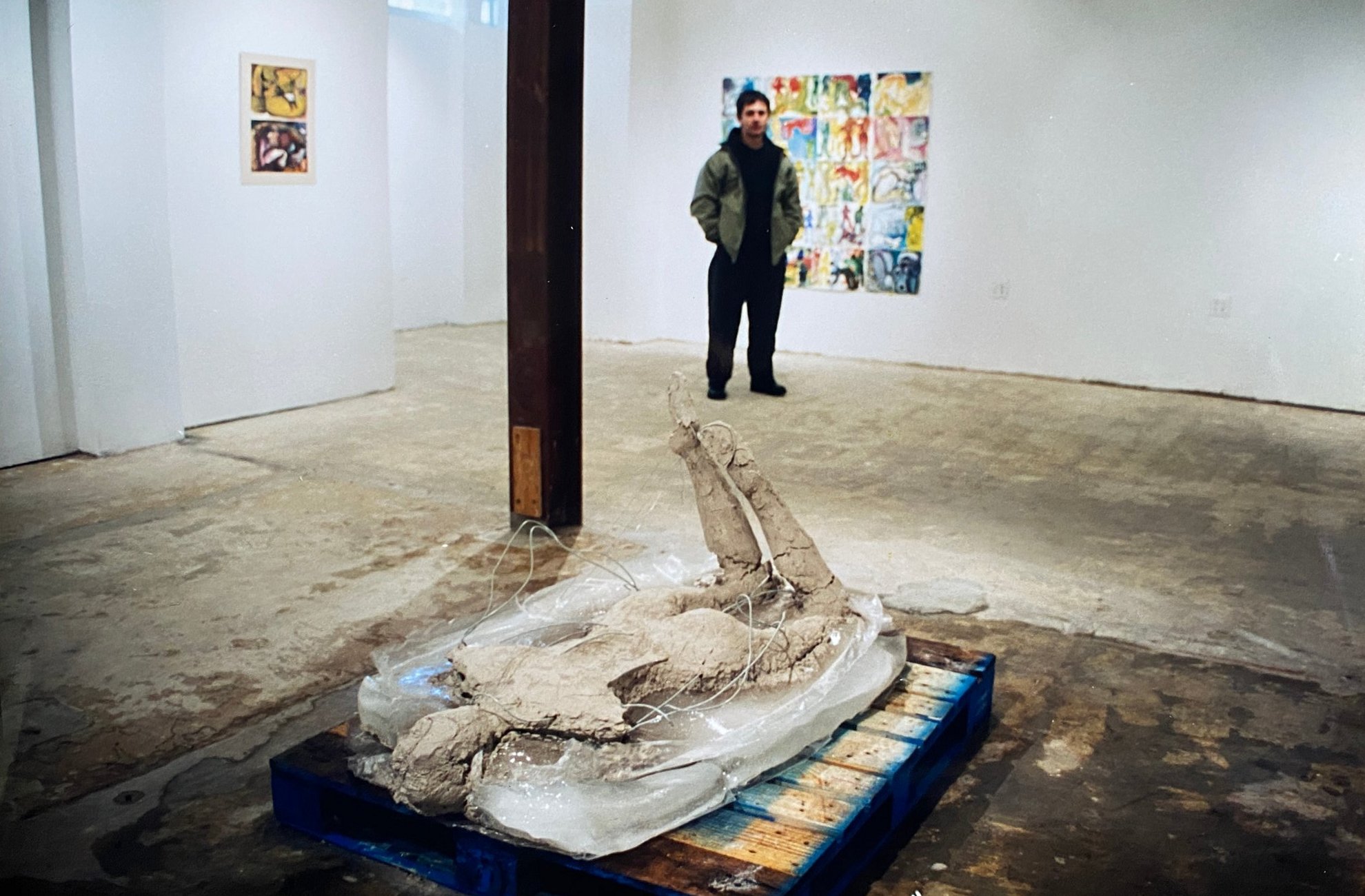
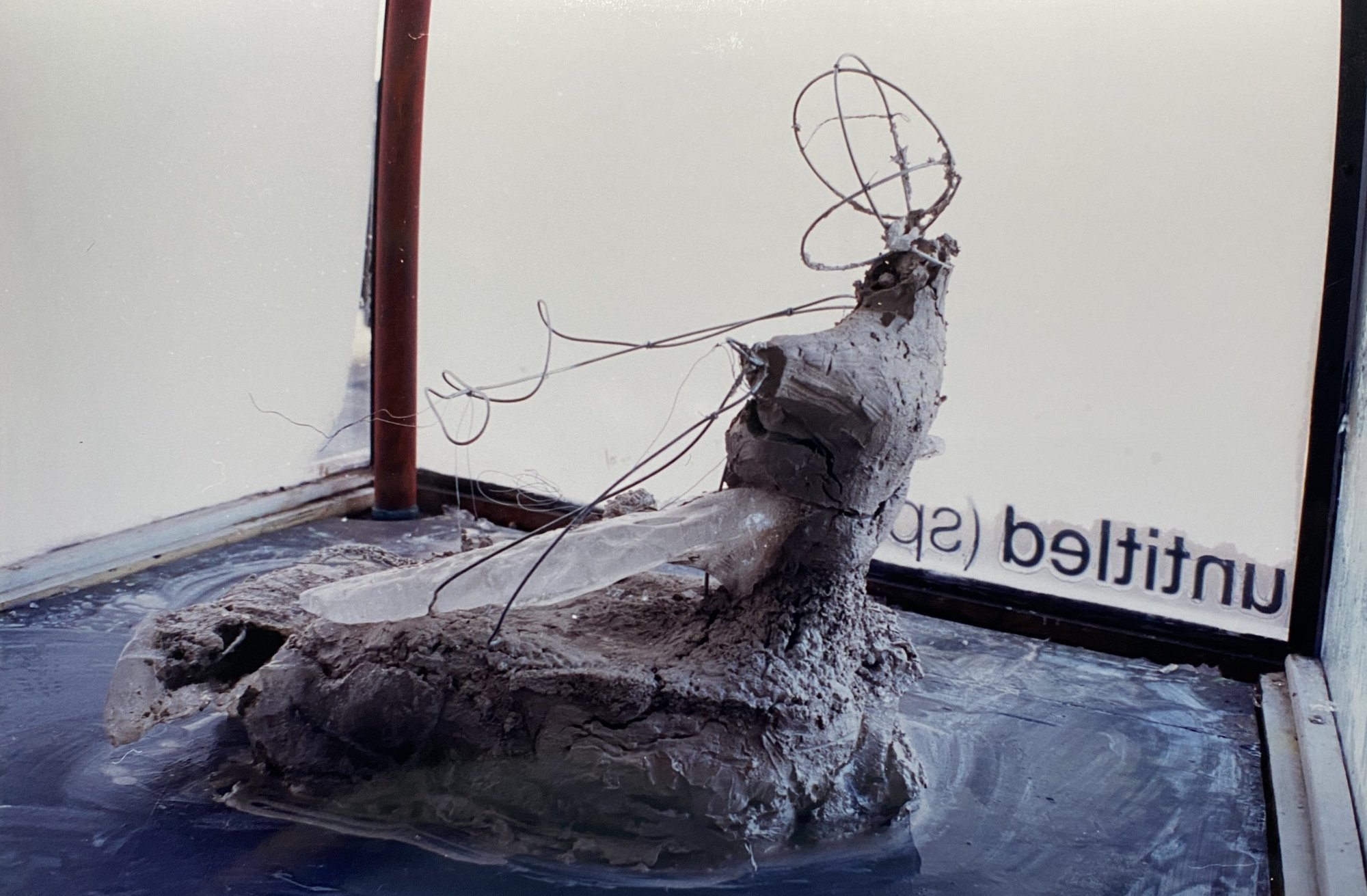
Time Lapse, the second piece of Forces of Circumstance, opened at untitled (space), 220 College Street, New Haven, on 13 January 2000. Two life-size clay figures on wire frames were frozen in ice: one lay on a pallet on the gallery floor, one sat in the street window. Over the run of the exhibition the ice melted and the figures slumped, leaving clay, wire and water. On the walls hung paintings, among them a grid of twenty panels. In a review in the New Haven Advocate, Tosha described the work as “about trying to capture the fear of not being able to control time.”
1999–2006 · Music
Sound, composition
Around 2000 his practice moved largely into sound. As Pencilbrain he released the 12-inch Follow Me (Straight Ahead, Switzerland, 1999), written with Sara Jay, vocalist on Massive Attack’s Mezzanine, followed by the albums Diverted Witness and Come For Me. A live recording from Utrecht in 1999 was released in 2023.
2011–2026 · Amsterdam and beyond
Performance, sculpture, writing, music
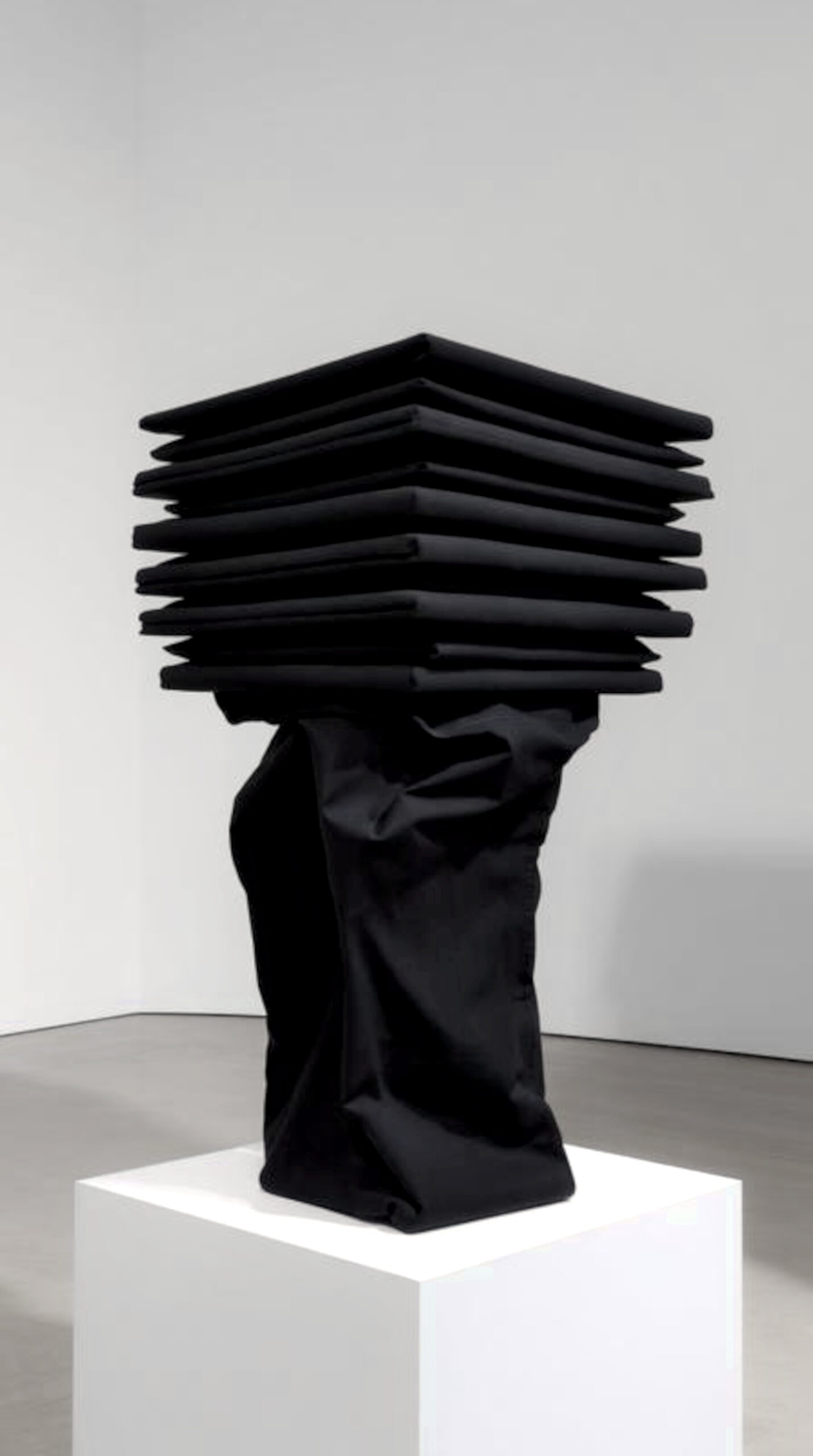
He returned to performance at KULTER in Amsterdam (2011) and performed Vitruvian Man at the Yale Observatory in Bethany, Connecticut, in August 2021. Recent exhibitions include the 1st Sanremo Biennale (2023) and the XV Florence Biennale (2025). His sculpture series Opus: The Assembler was the cover story of Art Market Magazine no. 111 (2026), which also published the Strata model. He has written seven books, hosts the podcast ZT Tosha: Art and Thought (since 2024), and continues to compose: his latest release is At Twelve O’Clock (2026), a contemporary classical piece built on a single measure.
A reading
Across four decades, ZT Tosha’s work returns to one question: what remains of a form after the conditions that produced it have been altered? His drawings of 1993 were made while the war in Bosnia was destroying his native Mostar, and with it much of his early archive. From then on the body is folded into the frame, carried, frozen and left to melt, cut apart and rebuilt. The war is rarely the subject. It is the condition under which the work learned to keep what survives.
Text: ZT Tosha Studio, 2026
Listen, read and contact
Pencilbrain, Follow Me (1999) on Discogs
At Twelve O’Clock (2026) on Spotify
Podcast: ZT Tosha: Art and Thought
Writing on Substack
For enquiries, please use the contact page.
